
African Daisy Mix
African Daisy Mix
Couldn't load pickup availability
500 seeds
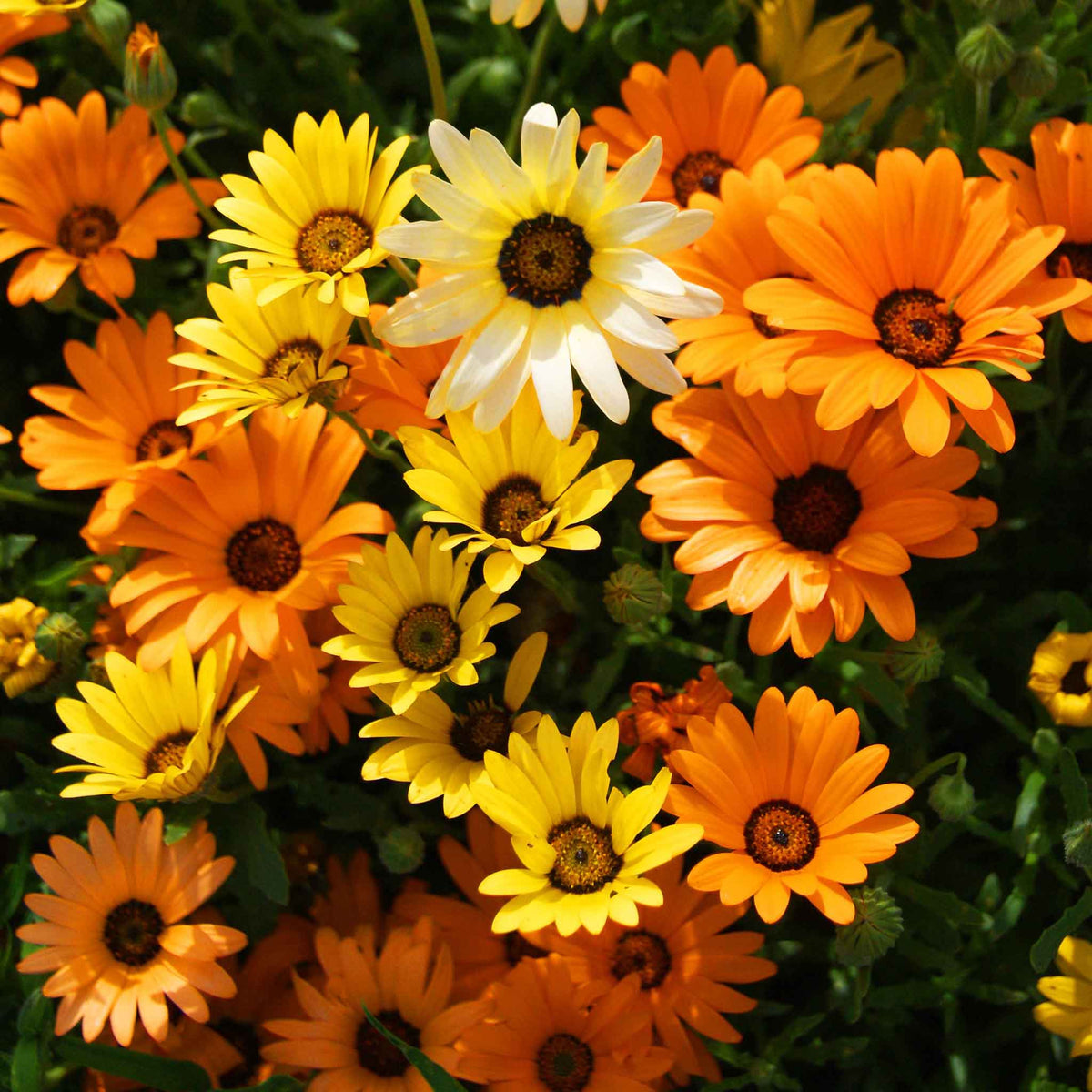
African Daisy Mix produces cheerful daisy-like flowers in shades of orange, yellow, white, cream and salmon, often with a contrasting dark center.
It is a relatively easy plant to grow from seed and is particularly well suited to sunny locations with light, sandy or well-drained soil. It is naturally adapted to seasonal dry conditions and becomes more drought tolerant after establishment.
The flowers open best when exposed to direct sunlight and may close during cloudy weather or later in the day.
🌱 Best Planting Time in the Gulf
Because Dimorphotheca sinuata prefers mild temperatures, it is best grown during the cooler part of the Gulf growing season.
- Gulf region: September–April
- Kuwait: Late September–December for sowing, with October–November particularly suitable
- In warmer Gulf areas, autumn sowing can produce flowers through winter and spring.
- Avoid starting seeds during the peak summer heat.
This timing is based on its natural preference for cooler, wetter seasonal conditions and guidance for frost-free climates, where fall sowing can produce winter and spring flowers.
🌿 How to Sow the Seeds
- Choose a location with full sun and good drainage.
- Prepare a fine, loose seedbed and remove large stones and soil clumps.
- Sow the seeds very shallowly, around 0.3–0.6 cm deep.
- Cover them lightly with fine soil.
- Gently firm the surface so the light, papery seeds do not blow away.
- Water using a fine spray.
- Keep the upper soil layer evenly moist until germination.
The seeds can be sown directly outdoors. They can also be started in trays or small pots where temperature and moisture are easier to control.
🌡️ Germination
- Suitable temperature: approximately 15–21°C
- Germination: usually about 4–15 days
- Keep the seedbed moist but never waterlogged.
- Provide good light once seedlings emerge.
Under suitable conditions, sources report germination from approximately 4–10 days, while commercial growing guides commonly give around 10–15 days.
🌱 Thinning & Spacing
When the seedlings are established, thin them to approximately:
- 20–25 cm between plants
- Around 25–30 cm between rows where grown in rows
Thinning gives each plant enough room to branch and improves air circulation.
☀️ Sunlight
African Daisy Mix prefers full sun.
In the Gulf:
- Provide strong morning and winter sunlight.
- During unusually hot periods, light afternoon shade can help reduce stress.
- Avoid planting in locations surrounded by heat-reflecting walls or concrete.
Full sun is particularly important because the flowers open in response to sunlight.
💧 Watering
- Keep the soil evenly moist during germination.
- Water young plants regularly until they become established.
- Once established, allow the upper layer of soil to dry slightly between watering.
- Avoid constantly wet soil.
- Reduce watering during periods of extreme heat if the plant is showing heat stress.
Established plants have good drought tolerance and naturally grow in relatively dry, sandy environments.
🌱 Soil
Use light, sandy or sandy-loam, well-drained soil.
The plant can perform well in relatively poor soil, provided drainage is good. Avoid heavy, water-retentive soil.
For containers, use:
- Quality potting soil
- Compost in moderate amounts
- Perlite, pumice or coarse sand for drainage
🌿 Fertilizing
African Daisy does not require heavy feeding.
A moderate amount of mature compost before planting is usually sufficient. If additional fertilizer is needed, use a mild balanced flower fertilizer.
Avoid excessive nitrogen because it can encourage leafy growth rather than abundant flowers.
🌼 Flowering
Under suitable conditions, African Daisy Mix can begin flowering approximately 2–3 months after sowing.
The flowers are most impressive during mild weather and bright sunshine. Regularly removing faded flowers can help maintain a neat appearance and encourage further flowering.
🪴 Growing in Containers
African Daisy Mix is well suited to containers.
Use:
- A container with good drainage holes
- Light, well-drained growing medium
- Approximately 20–25 cm spacing between plants
- A sunny location with good airflow
Containers are particularly useful in the Gulf because they can be moved to a cooler or lightly shaded location when temperatures become extreme.
🦋 Pollinators
The colorful flowers are attractive to bees and butterflies, making African Daisy Mix a useful addition to pollinator-friendly gardens.
🌿 Maintenance
- Remove faded flowers regularly for a tidier display.
- Maintain good spacing and airflow.
- Avoid excessive watering.
- If you want to collect seeds, leave some mature flower heads on the plant until the seeds develop and dry.
- Collect the seeds promptly because mature seeds can be dispersed by wind.
🔥 Gulf Climate Tips
- Grow it primarily as a cool-season flower in the Gulf.
- In Kuwait, October–December is a particularly useful sowing window.
- Protect young seedlings from extreme afternoon heat.
- Excellent drainage is essential.
- Do not keep the soil constantly wet.
- Give the plants plenty of direct sunlight during the mild season.
- If flowering declines as temperatures become very high, this is usually a response to heat rather than a need for more fertilizer.
🌱 Growing Tip: Sow the seeds shallowly and keep the surface of the soil evenly moist during germination. Once the plants are established, give them plenty of sunshine and avoid overwatering for healthier growth and better flowering.
Share