
Alcea Double Apricot
Alcea Double Apricot
All Drops Store
Couldn't load pickup availability
1. About the Plant
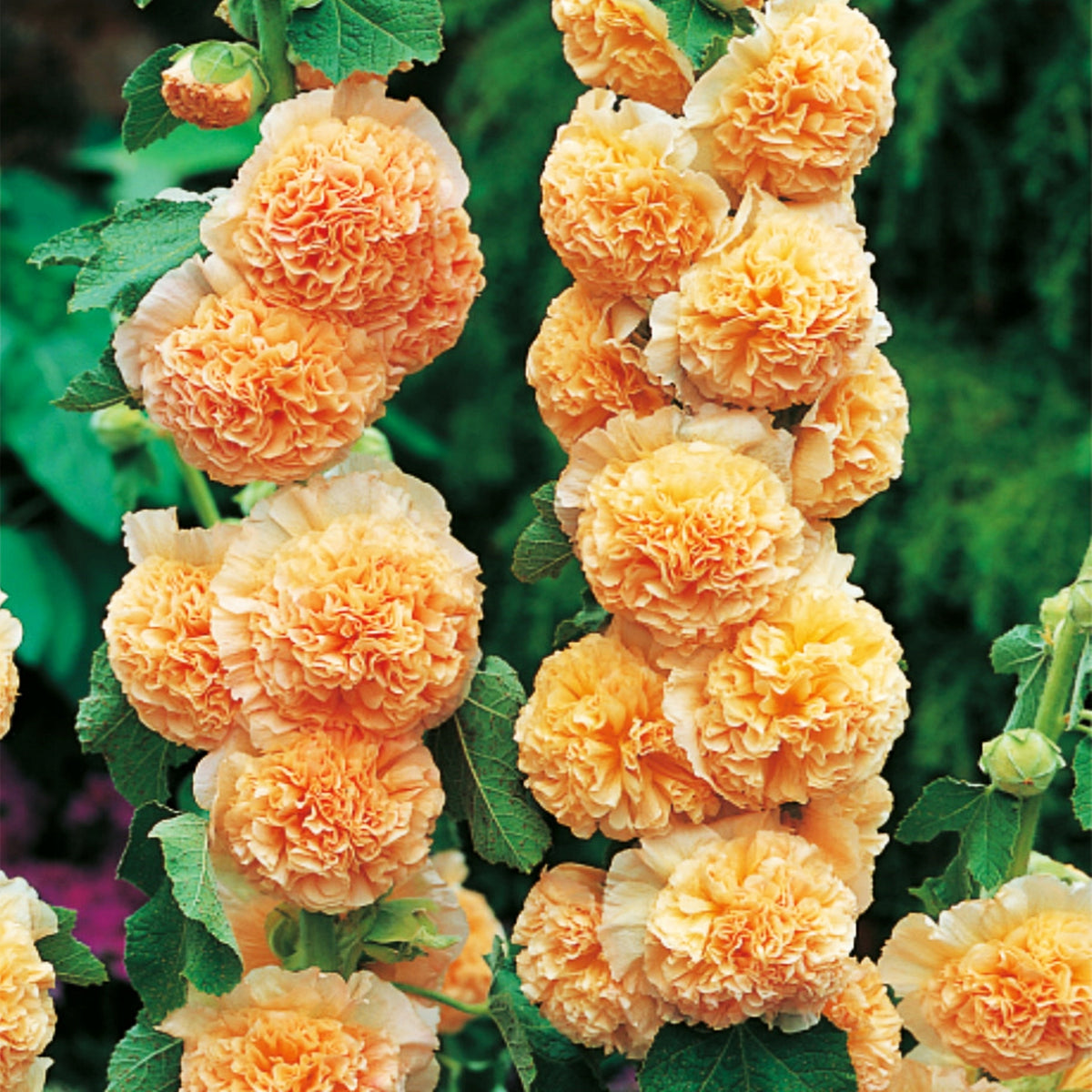
Alcea rosea ‘Double Apricot’, commonly known as Double Apricot Hollyhock, is a beautiful flowering biennial or short-lived perennial admired for its tall flower spikes and large, fully double blooms.
Its flowers feature soft apricot, peach, and warm pale-orange shades, with numerous layered petals that create a ruffled, rose-like appearance. The blooms grow along tall upright stems above broad, green, slightly rough-textured leaves.
Depending on growing conditions, the plant can reach approximately 120–200 cm in height. It is an excellent choice for garden borders, flower beds, cottage-style gardens, and large decorative containers. Its flowers also attract bees and other pollinators.
2. Best Planting Time in the Gulf Area
-
Recommended planting season: October to December.
-
Best time in Kuwait: November to early December.
-
Early spring planting may be possible in cooler Gulf locations, but autumn is generally preferable.
-
Avoid transplanting during the hot summer months.
-
Choose a location protected from intense afternoon sunlight and hot, dry winds.
3. Planting Instructions for Seedlings
-
Select a location with good sunlight and fertile, well-draining soil.
-
Prepare the soil by mixing it with mature compost or well-rotted organic matter.
-
Carefully remove the seedling from its nursery container without damaging the roots.
-
Plant it at the same depth as it was growing in its original container. Do not bury the crown or lower stem too deeply.
-
Leave approximately 40–60 cm between plants to allow sufficient space for mature growth and good airflow.
-
Gently firm the soil around the roots.
-
Water thoroughly after planting to help the roots settle.
4. Establishment
Keep the soil evenly moist during the first few weeks while the seedling establishes its roots.
-
Avoid allowing the soil to dry out completely during establishment.
-
Do not keep the soil constantly wet.
-
New leaf growth indicates that the seedling is adapting to its new location.
-
If the seedling was grown under nursery shade, gradually introduce it to stronger sunlight over several days.
5. Sunlight
Alcea rosea ‘Double Apricot’ prefers full sun but benefits from some afternoon protection in the Gulf climate.
-
Provide approximately 5–6 hours of sunlight daily.
-
Morning sunlight is ideal in Kuwait.
-
Offer light afternoon shade during particularly hot periods.
-
Avoid deep shade, as insufficient sunlight can result in weaker stems and fewer flowers.
6. Watering
-
Water regularly during the establishment period.
-
Once established, water deeply when the upper 2–3 cm of soil begins to dry.
-
Increase watering during hot, dry, or windy weather when necessary.
-
Avoid frequent shallow watering, which encourages shallow root development.
-
Water near the base of the plant rather than over the foliage to reduce the risk of fungal diseases.
7. Soil Requirements
Double Apricot Hollyhock grows best in fertile, loose, well-draining soil rich in organic matter.
A suitable growing mixture can contain:
-
Quality garden soil.
-
Mature organic compost.
-
Coarse sand or perlite to improve drainage.
The soil should retain enough moisture to support healthy growth while allowing excess water to drain freely. Avoid heavy clay soil and areas where irrigation water collects.
8. Fertilizing
-
Add compost to the soil before planting.
-
Apply a balanced, slow-release fertilizer during active growth according to the product instructions.
-
Alternatively, use a diluted balanced liquid fertilizer every 3–4 weeks during the growing season.
-
Avoid excessive nitrogen, which encourages leafy growth at the expense of flowering.
-
Reduce fertilizing when the plant experiences heat stress.
9. Flowering
Alcea rosea ‘Double Apricot’ generally flowers during spring to early summer under suitable conditions.
Its tall flower spikes produce numerous large, fully double blooms in attractive apricot and peach shades. Flowers gradually open from the lower part of the stem upwards, creating a beautiful vertical display.
In the Gulf region, flowering may be shorter if temperatures rise quickly. Autumn planting, suitable sunlight, consistent watering, and protection from intense afternoon heat can help improve flowering performance.
10. Pruning and Maintenance
-
Remove faded flowers to maintain a tidy appearance and encourage continued flowering.
-
Remove yellow or damaged leaves when necessary.
-
Cut back flower stalks after flowering if you do not wish to collect seeds.
-
Tall stems may need stakes or support, particularly in windy locations.
-
Maintain good airflow between plants to reduce fungal problems.
-
Monitor the leaves for rust disease, which may appear as yellow spots followed by orange-brown powdery marks. Remove badly affected leaves and avoid wetting the foliage during watering.
11. Growing in Containers
Alcea rosea ‘Double Apricot’ can be grown in large containers, although it generally performs best in open garden beds.
-
Choose a sturdy container at least 35–45 cm deep and wide, with drainage holes.
-
Use fertile, well-draining potting soil.
-
Place the container in a sunny location with some protection from intense afternoon heat.
-
Provide support for tall flower stems if necessary.
-
Check soil moisture regularly, as containers dry out faster than garden beds.
12. Tips for Growing in the Gulf Area
-
Plant during autumn when temperatures become milder.
-
In Kuwait, November is generally a suitable planting month.
-
Provide morning sunlight and protection from extreme afternoon heat.
-
Use well-draining soil to prevent root problems.
-
Maintain consistent moisture without overwatering.
-
Allow enough space between plants for good airflow.
-
Protect tall flower spikes from strong winds.
-
Treat Hollyhock as a cool-season flowering plant in the Gulf, as extreme summer heat can shorten its growing and flowering period.
Gardening Tip: To enjoy beautiful apricot-coloured flower spikes, plant Double Apricot Hollyhock in fertile, well-draining soil and provide morning sunlight with afternoon protection. Install a support stake early if the planting area is exposed to strong winds.
Suitable for: Kuwait, UAE, Saudi Arabia, Qatar, Bahrain, Oman, and other Gulf countries when planted during the cooler season with appropriate heat protection.
Share