
Aubergine Rotonda Bianca Sfumata di Rosa
Aubergine Rotonda Bianca Sfumata di Rosa
Happy Green Shop
Country of origin: United Kingdom
Couldn't load pickup availability
200 seeds
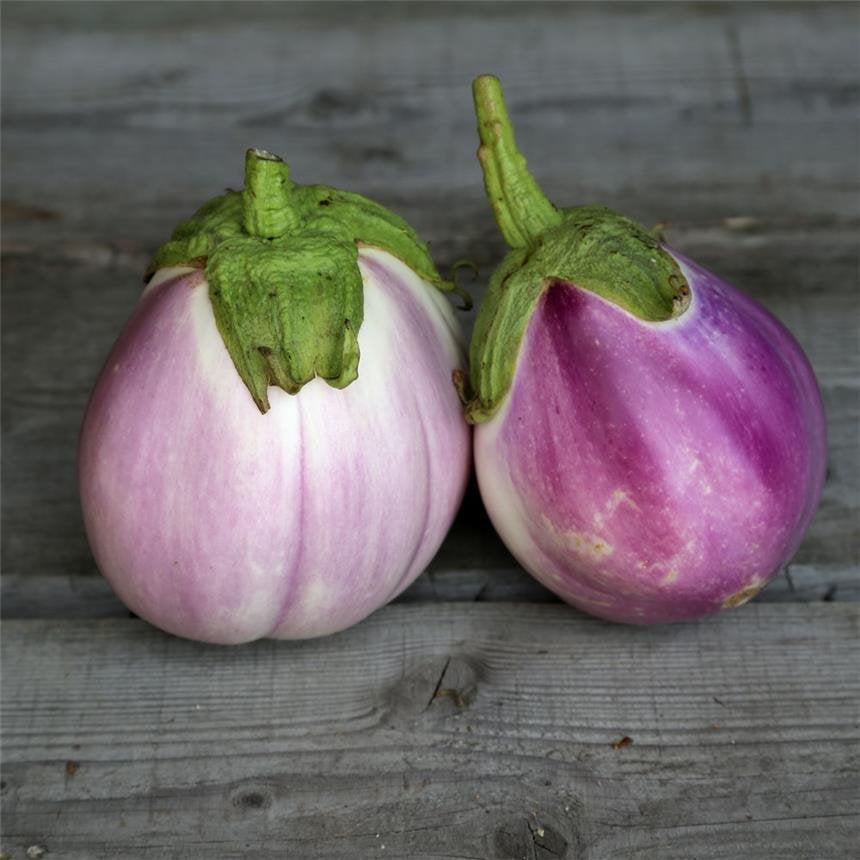
Rotonda Bianca Sfumata di Rosa is a beautiful and productive Italian heirloom aubergine variety. It produces distinctive round fruits with creamy-white skin shaded or streaked with lavender-pink. The fruits can reach approximately 15 cm across and have firm, creamy, tender flesh with a mild, delicate flavor and little or no bitterness.
It is a warm-season crop and performs best with plenty of warmth, sunlight, fertile soil and consistent moisture. General eggplant guidance places optimum growth around 21–30°C, while this variety germinates well at approximately 22–28°C.
🌱 Best Planting Time in the Gulf
For Gulf conditions, avoid starting young seedlings during the hottest part of summer.
- Kuwait: September–October and February–March
- UAE, Qatar, Bahrain: September–April, depending on local temperatures
- Saudi Arabia & Oman: September–April, adjusting for the local climate
- Best approach: Start seeds in a protected place and transplant once temperatures are warm but not excessively hot.
In very hot areas, aim for the plant to establish and fruit during the milder part of the season.
🌿 How to Sow the Seeds
- Fill seed trays or small pots with a fine, well-drained seed-starting mix.
- Sow the seeds approximately 0.5–1 cm deep.
- Cover lightly with fine soil and gently firm the surface.
- Keep the growing medium evenly moist, but never waterlogged.
- Maintain approximately 22–28°C for reliable germination.
- Germination usually takes around 6–14 days, depending on temperature and seed condition.
- Once seedlings develop their first true leaves, transplant them into individual pots.
- Harden the seedlings gradually before moving them outdoors.
🪴 Transplanting
Transplant when the seedlings are strong and outdoor conditions are consistently warm.
- Plant spacing: about 50–60 cm
- Row spacing: about 70 cm
- Choose a sunny, sheltered location.
- Handle the roots carefully when transplanting.
- A stake or support can be useful as the plant becomes heavily loaded with fruit.
The variety is commonly recommended at around 50 cm between plants, with some growing guides giving approximately 70 cm between rows.
☀️ Sunlight
Give the plants full sun for strong growth and good fruit production.
In the Gulf, morning and early afternoon sun is excellent. During periods of extreme summer heat, provide some protection from the strongest afternoon sun, particularly for young plants.
💧 Watering
Aubergines need consistent moisture, especially when flowering and producing fruit.
- Water deeply when the upper soil begins to dry.
- Keep the soil evenly moist.
- Increase watering during very hot weather.
- Avoid constantly saturated soil and standing water.
- Mulching around the plant can help reduce evaporation and keep the root zone cooler.
Consistent watering is particularly important when the plant is carrying fruit.
🌱 Soil
Use fertile, loose and very well-drained soil.
A good mixture can include:
- Quality garden soil or sandy loam
- Well-rotted compost
- A small amount of perlite, pumice or coarse material for drainage
Eggplant generally performs well around pH 5.5–6.8 and is a relatively nutrient-demanding crop.
🌿 Fertilizing
Feed with a balanced vegetable fertilizer after the plants become established.
During flowering and fruit development, use a fertilizer suitable for fruiting vegetables. Avoid excessive nitrogen, as it can encourage leafy growth at the expense of flowers and fruit.
🍆 Harvesting
Harvest the aubergines while they are firm, glossy and well-colored, before they become excessively mature.
The characteristic fruit is round, creamy-white with attractive pink/lavender shading. The flesh is firm, mild and delicate.
🪴 Growing in Containers
This variety can also be grown successfully in containers.
- Use at least a 15–20 L container, with a larger pot preferable for a vigorous mature plant.
- Make sure the pot has several drainage holes.
- Use fertile, well-drained potting soil.
- Place the container where it receives plenty of sunlight.
- During extreme Gulf heat, move the container to a location with morning sun and afternoon protection.
🔥 Gulf Climate Tips
- Start seeds during the milder growing seasons, rather than peak summer.
- Protect young seedlings from extreme afternoon heat.
- Good drainage is essential.
- Use mulch to reduce moisture loss and root-zone temperature.
- Water consistently during flowering and fruit formation.
- Protect plants from strong winds where possible.
- Regularly check for aphids, whiteflies, spider mites and caterpillars.
- Good air circulation helps reduce fungal problems.
🌱 Growing Tip: In the Gulf, timing is especially important. If possible, sow so that the plants reach flowering and fruit production during the cooler part of the season rather than during the most intense summer heat.
Share