
Dahlia- Cactus Flowered Mix
Dahlia- Cactus Flowered Mix
The Seed Collection
Country of origin: Australia
Couldn't load pickup availability
50 Seeds
About Dahlia – Cactus Flowered Mix
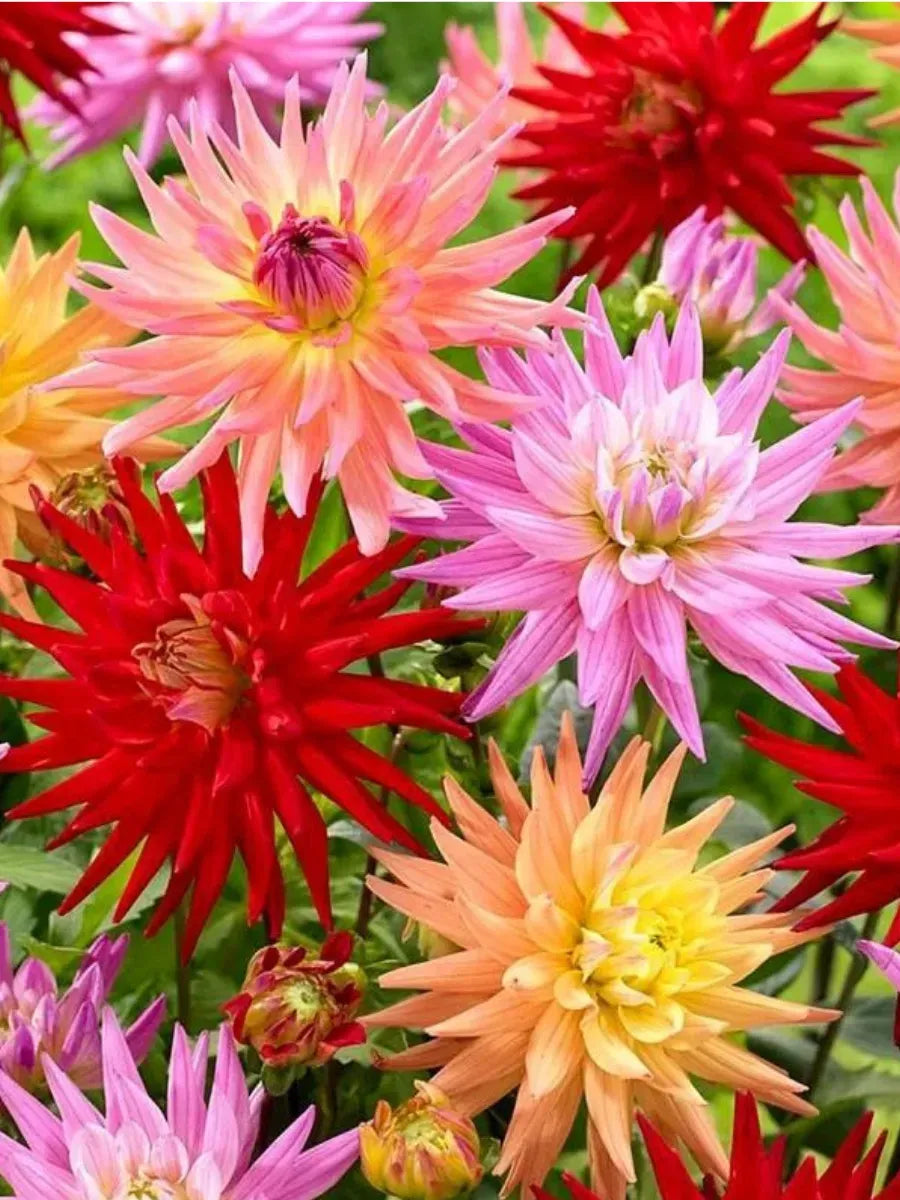
Dahlia Cactus Flowered Mix is a beautiful mixture of dahlias known for their distinctive, spiky-looking flowers. The petals are long, narrow, and often rolled or pointed, giving the blooms a starburst appearance. This mixture may produce flowers in a variety of attractive colours, including red, pink, yellow, orange, purple, and white.
These dahlias add height, colour, and an elegant appearance to garden beds, borders, and large containers. They are excellent for cut flowers and can brighten outdoor spaces during the cooler growing season.
Plants grown from seeds may vary in flower colour, size, shape, and height. They may not produce flowers identical to any particular named cactus dahlia variety.
Planting Instructions in the Gulf Region
1. Best Planting Time
-
In Kuwait, sow seeds from October to December, preferably in October or November.
-
In other Gulf countries, sow from September to December, depending on local temperatures.
-
Avoid sowing during the intense summer heat.
2. Sowing the Seeds
-
Use seed trays or small pots with drainage holes.
-
Fill them with a light, fertile, well-draining seed-starting mix.
-
Sow seeds on the surface and cover lightly with approximately 3–5 mm of fine soil.
-
Mist gently with water to moisten the growing medium.
-
Cover the tray with a transparent lid or plastic cover to maintain humidity, allowing some ventilation.
3. Germination
-
Ideal germination temperature is approximately 18–22°C.
-
Seeds usually germinate within 7–14 days, although some may take longer.
-
Keep the growing medium slightly moist but never waterlogged.
-
Place the trays in a bright, warm location away from strong direct sunlight.
-
Remove the cover once seedlings emerge.
4. Transplanting
-
Transplant seedlings when they have developed 2–3 sets of true leaves.
-
Harden them gradually by exposing them to outdoor conditions over 5–7 days.
-
Plant them at the same depth they were growing in their seed trays.
-
Allow approximately 45–60 cm between plants; taller or larger-growing plants may need 60–90 cm.
5. Sunlight and Location
-
Dahlias grow best with around 6 hours of sunlight daily.
-
In the Gulf, choose a location with gentle morning sunlight and partial afternoon shade.
-
Protect plants from intense midday sun, hot winds, and heat reflected from walls or paving.
6. Soil Requirements
-
Use fertile, loose, well-draining soil enriched with mature compost.
-
A suitable potting mixture can contain garden soil or potting mix, compost, and perlite or coarse sand.
-
Good drainage is essential to prevent root problems.
7. Watering
-
Keep the soil lightly moist during germination and early growth.
-
Once established, water deeply when the top 2–3 cm of soil becomes dry.
-
Increase watering during active growth and flowering, especially in warm weather.
-
Avoid standing water around the roots.
8. Fertilizing
-
Begin feeding once seedlings are established and actively growing.
-
Apply a balanced liquid fertilizer at half strength every 2–3 weeks.
-
Use a fertilizer suitable for flowering plants as buds begin to form.
-
Avoid excessive nitrogen, which encourages leafy growth at the expense of flowers.
9. Flowering and Maintenance
-
Plants may begin flowering approximately 12–16 weeks after sowing, depending on growing conditions and variety.
-
Pinch the growing tip when plants reach approximately 25–30 cm to encourage branching and more flower stems.
-
Remove faded flowers regularly to encourage continued blooming.
-
Stake taller plants when necessary, particularly those carrying large blooms.
10. Growing in Pots
-
Choose a pot at least 35–45 cm wide, with drainage holes.
-
Use a fertile, well-draining potting mix.
-
Place the pot where it receives morning sunlight and afternoon shade.
-
Larger or taller plants may require bigger containers and support stakes.
11. Summer Care in the Gulf
-
Dahlias prefer cool growing conditions and may struggle during the extreme Gulf summer.
-
Protect plants from intense heat and reduce stress by providing afternoon shade.
-
Flowering may slow or stop when temperatures become too high.
-
Some plants may develop underground tubers. When the foliage naturally yellows and dries, reduce watering. Tubers can be lifted, dried in a shaded, ventilated place, and stored in a cool, dry location until the next suitable growing season.
Share