
Dragon's Claw Millet
Dragon's Claw Millet
Couldn't load pickup availability
25 Seeds
Dragon's Claw Millet is a warm-season, drought-tolerant millet originating from the highlands of Ethiopia and Uganda. It is also widely known as Finger Millet or Ragi.
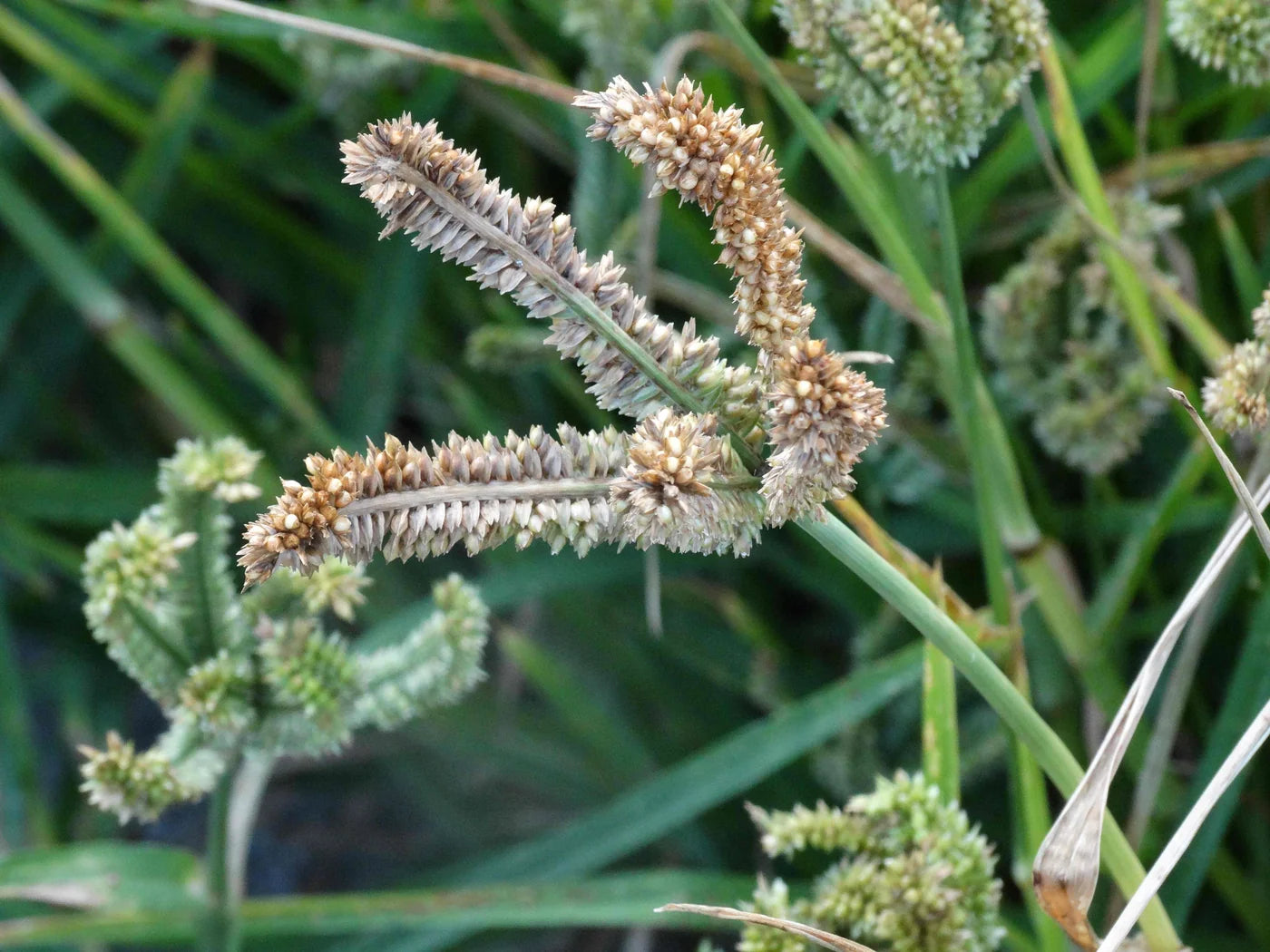
The plant produces unusual seed heads that resemble fingers or a dragon's claw, making it attractive for ornamental borders and dried arrangements. The mature seeds are also edible and are traditionally used for flour, porridge, flatbreads, and other foods.
It is relatively short compared with many other millet types, with some seed lines growing around 45–60 cm tall, although size can vary with growing conditions.
🌱 Best Sowing Time
- Gulf Area: September–April
- Kuwait: October–March
- UAE & Qatar: September–April
- Saudi Arabia & Bahrain: September–April
- Oman: September–April
- Best period for Kuwait: October–February
Dragon's Claw Millet needs warm soil for good establishment, so it is best started during the warm-to-moderate part of the Gulf growing season rather than during the coldest winter weeks or the most extreme summer heat.
🌿 How to Sow
- Use loose, fertile, well-draining soil.
- Sow the seeds directly into the garden or into containers.
- Plant approximately 1 cm deep.
- Space seeds around 8–10 cm apart initially.
- If growing in rows, leave approximately 25–30 cm between rows.
- Water gently after sowing.
- Keep the soil consistently moist until seedlings are established.
- Thin seedlings if they become crowded.
Direct sowing is suitable, although Dragon's Claw Millet can also be started in containers and transplanted successfully.
🌡️ Germination
- Temperature: Approximately 20–30°C
- Germination: Usually around 5–14 days under suitable conditions
- Keep the seedbed warm and lightly moist.
- Avoid allowing the soil to become waterlogged.
🌱 Seedling Care
Once seedlings emerge:
- Provide strong sunlight.
- Give good morning and early-afternoon light.
- Water regularly while plants are young.
- Thin crowded seedlings to improve airflow.
- Protect very young plants from extreme Gulf heat.
- Avoid continuously wet soil.
Once established, the plant becomes considerably more drought tolerant.
🌿 Transplanting
If starting indoors or in trays:
- Transplant when seedlings are well established.
- Harden them gradually before planting outside.
- Handle the roots carefully.
- Space mature plants approximately 25–30 cm apart for a compact crop.
- For larger ornamental growth, more space can be provided.
Some growing recommendations use approximately 30 cm between plants, while other growers use wider spacing depending on their production system.
☀️ Sunlight
- Prefers full sun.
- Aim for at least 6 hours of strong sunlight.
- Morning sun is especially useful in the Gulf.
- During extreme heat, light afternoon shade can protect young plants.
- Mature plants tolerate heat and dry conditions better than young seedlings.
💧 Watering
- Keep soil evenly moist during germination.
- Water regularly while plants are establishing.
- Once established, allow the upper soil layer to dry slightly between watering.
- Increase irrigation during very hot and dry weather.
- Avoid standing water.
Dragon's Claw Millet is relatively drought tolerant once established, making it a useful choice for warm, dry conditions.
🌱 Soil
Use soil that is:
- Loose
- Fertile
- Well-draining
- Rich in organic matter
For containers, a mixture of quality potting soil, compost, perlite or pumice, and coarse sand works well.
🌿 Fertilizing
- Add compost or well-aged organic matter before planting.
- Use a light balanced fertilizer after the plants are established.
- Avoid excessive nitrogen.
- A balanced feeding program can support healthy stems and seed-head development.
🌾 Seed Heads & Harvesting
The most distinctive feature is the unusual finger-like seed heads, which can develop several upright "fingers." Some plants produce four or five fingers per head, while other seed lines may produce more.
For grain:
- Allow the seed heads to mature and turn brown/dry.
- Cut mature heads during dry weather.
- They can be hung upside down in a dry, ventilated place for further drying.
- Thresh the dried heads to remove the seeds.
For ornamental use, the dried seed heads are also attractive in arrangements.
🔥 Gulf Climate Tips
- Choose the warm growing season rather than the peak of summer.
- In Kuwait, October–February is a good practical starting window.
- Full sun encourages strong growth and seed-head development.
- Protect young seedlings during extreme heatwaves.
- Established plants tolerate dry conditions better.
- Use mulch to reduce moisture loss and moderate root-zone temperature.
- Ensure good drainage, especially during humid coastal weather.
- Provide adequate spacing and airflow.
🌱 Growing Tip: Dragon's Claw Millet is particularly interesting for Gulf gardens because it combines heat tolerance, drought tolerance, edible grain, and unusual ornamental seed heads. For Kuwait, sow from October through February, keeping the young plants well watered until established; after that, reduce watering gradually as the plants become more drought tolerant.
Share