The plant tolerates poor or dry soil, but avoid heavy, waterlogged soil.
Light & Temperature:
Germination temperature: 18–22°C (64–72°F).
Requires full sun for strong growth and silver-blue color.
In Gulf areas, provide morning sun and light afternoon shade during early growth.
Germination Time:
Seeds germinate in 3–5 weeks under cool, slightly moist conditions.
Be patient — germination can be slow and irregular.
Transplanting & Spacing:
When seedlings reach 8–10 cm tall, transplant them into larger pots or directly in the garden.
Space plants 30–40 cm apart to allow air circulation and deep root growth.
Choose a sunny, open, and dry location.
Growing Tips for Gulf Climate:
Watering: Water moderately during the growing phase; once established, Eryngium becomes highly drought-tolerant. Avoid overwatering.
Feeding: Use a low-nitrogen fertilizer once a month during active growth to maintain compact form and vibrant color.
Sunlight: Requires 6–8 hours of sunlight daily for best foliage tone and flowering.
Heat Tolerance: Mature plants handle Gulf heat well if the soil is dry and airy.
Pruning: Remove spent flowers to promote more blooms and prevent self-seeding.
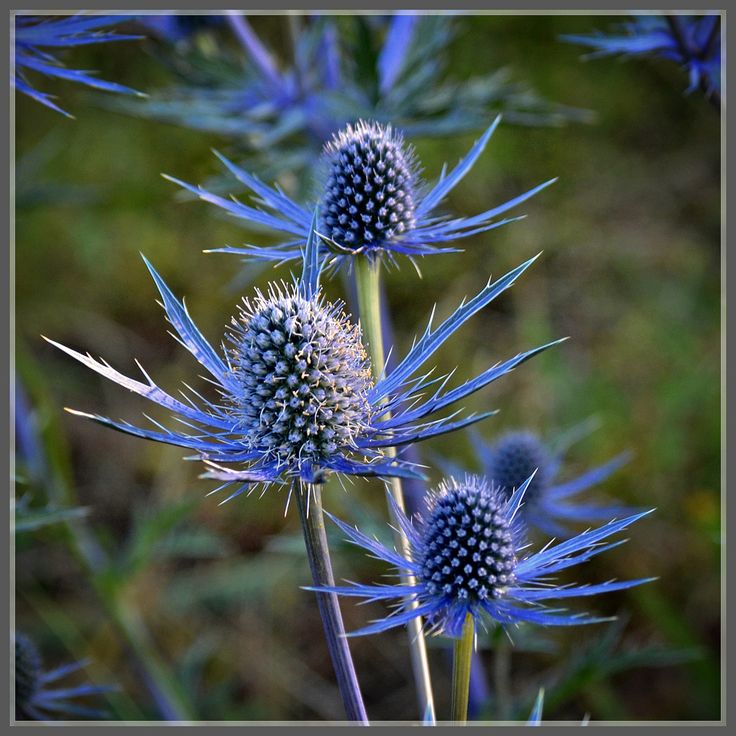
Blooming: Produces striking metallic blue, cone-shaped flower heads with spiky leaves — blooming from late winter through early summer in Gulf conditions.
Perfect for rock gardens, dry landscapes, or borders due to its sculptural look and resilience.