

Giant Allium
Giant Allium
Couldn't load pickup availability
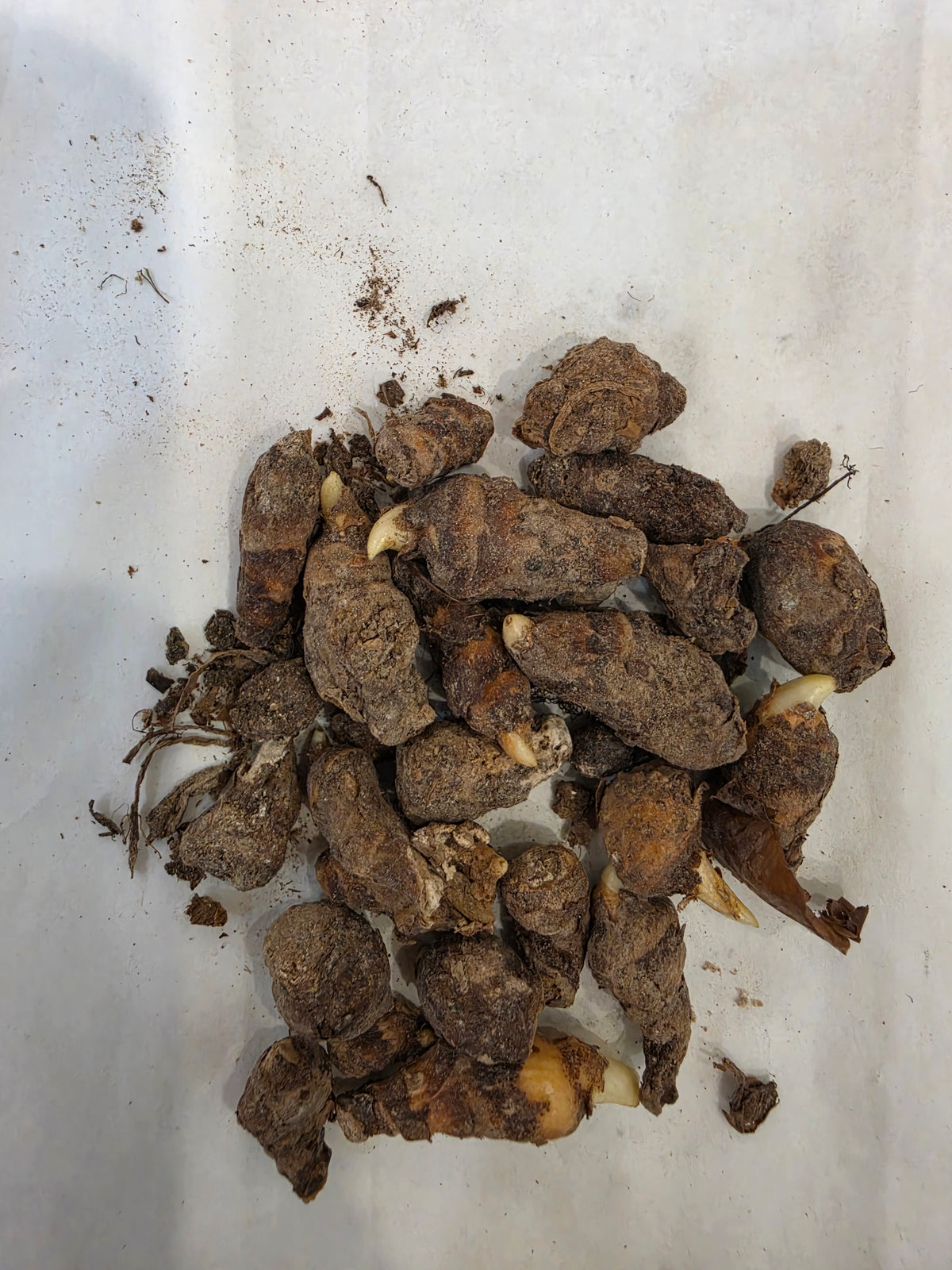
10 - 12 Rhizomes
Giant Allium (Allium giganteum) is one of the most impressive ornamental alliums, producing tall, strong flower stems topped with large, rounded clusters of small lilac-purple flowers. Mature plants can reach approximately 1.5–2.5 m depending on growing conditions. The foliage appears at the base and begins to die back around flowering time, allowing the tall flower stems to become the main feature.
It is excellent for flower borders, containers, cut flowers and dried flower arrangements. The large spherical flower heads are also attractive to pollinators.
🌱 Best Planting Time
For the Gulf region:
- Gulf area: October–January
- Kuwait: November–December is generally the preferred period
- Plant during the cooler season and avoid the extreme summer heat.
- In areas with a warmer winter, planting can be extended toward January if healthy dormant bulbs are available.
🌿 How to Plant the Bulbs
- Choose large, firm bulbs without soft spots, mold or damage.
- Select a sunny location with excellent drainage.
- Loosen the soil and remove weeds and stones.
- Place each bulb with the pointed growing tip facing upward.
- Plant at approximately 3–4 times the bulb's diameter. For large Giant Allium bulbs, around 10–15 cm or more may be appropriate depending on bulb size.
- Space large bulbs approximately 20 cm apart to give the mature plants room to develop.
- Cover with soil and water lightly to settle the soil around the bulb.
🪴 Growing in Containers
Giant Allium can be grown in containers, provided the container is large and deep enough.
- Use a heavy, stable pot because mature flower stems can become very tall.
- Make sure the container has excellent drainage.
- Use a loose mixture of potting soil, compost and perlite, pumice or horticultural grit.
- Avoid small lightweight pots that can easily be blown over.
- Containers are useful in the Gulf because they can be moved to a more protected position during extreme heat.
🌡️ Sprouting and Early Growth
The bulb normally develops roots first, followed by basal leaves and then the tall flowering stem.
- Keep the soil lightly moist during active growth.
- Do not keep the soil constantly wet.
- Provide good airflow.
- Protect young growth from extreme heat.
- The leaves naturally begin to decline as flowering develops, which is normal for Giant Allium.
☀️ Sunlight
Giant Allium prefers full sun and performs best with plenty of light.
For Gulf conditions:
- Provide strong morning sunlight.
- During very hot weather, protect the plant from intense afternoon sun.
- Good airflow is important.
- A location with morning sun and light afternoon protection can help reduce heat stress.
💧 Watering
- Water lightly after planting.
- During active growth, water when the upper soil begins to dry.
- Avoid frequent heavy irrigation.
- Never allow water to remain around the bulb.
- Once flowering finishes and foliage begins to die back, gradually reduce watering.
- Avoid unnecessary summer irrigation while the bulb is dormant because excessive moisture can encourage bulb rot.
🌱 Soil
Giant Allium needs fertile, loose and very well-drained soil. It can grow in loam, sand and other well-drained soils.
For Gulf containers or heavy soil, a useful mix is:
- Quality potting soil
- Compost or well-rotted organic matter
- Perlite, pumice or coarse horticultural grit
Avoid heavy soil that stays wet for long periods.
🌿 Fertilizing
- Add a moderate amount of compost before planting.
- A light balanced bulb fertilizer can be applied around planting or early growth.
- Avoid excessive nitrogen.
- Once the plant is established, heavy feeding is usually unnecessary.
🌸 Flowering
Giant Allium produces spectacular large, rounded lilac-purple flower heads on tall, upright stems. Flower-head size can be around 10 cm or more, depending on the plant and growing conditions.
The foliage often begins dying back before or around flowering, so this should not be mistaken for a problem.
Because the flower stems can become tall and top-heavy, planting in a sheltered position is recommended. Strong Gulf winds may make staking necessary.
🌿 After Flowering
- Remove faded flower stems if desired.
- Allow the foliage to naturally turn yellow and dry.
- Do not remove healthy green foliage too early because it helps replenish the bulb.
- Once the foliage has completely died back, keep the bulb relatively dry during dormancy.
- Established bulbs can remain undisturbed for several years before being divided if they become crowded.
🔥 Gulf Climate Tips
- Kuwait: November–December is a good starting point for planting.
- Use containers if your garden soil has poor drainage.
- Give the plant strong morning sun but protect it from extreme afternoon heat.
- Keep the bulb cool and well drained.
- Avoid summer irrigation while the bulb is dormant.
- Plant in a sheltered location because Giant Allium can become very tall.
- Support the flower stem if strong winds are common.
- For the best visual effect, plant several bulbs together rather than a single bulb.
🌱 Growing Tip: For Kuwait, plant Giant Allium bulbs in November–December, approximately 3–4 times the bulb diameter deep, with large bulbs generally around 20 cm apart. Give them excellent drainage, strong morning sun and protection from extreme afternoon heat.
Share