
1
/
of
1
Habranthus Tubispathus Yellow
Habranthus Tubispathus Yellow
No reviews
Regular price
2.050 KWD
Regular price
Sale price
2.050 KWD
Shipping calculated at checkout.
Quantity
Couldn't load pickup availability
10 Seeds
🌱 Best Sowing Time
- Gulf: October–February.
- Kuwait: November–January is the preferred period for sowing.
- February can also work while temperatures remain moderate.
- Avoid sowing during the extreme summer heat.
- Ideal germination temperature: approximately 18–24°C.
🌿 How to Sow the Seeds
- Use a light, gritty, well-drained seed-starting mix.
- Moisten the medium before sowing.
- Sow seeds approximately 0.3–0.5 cm deep, or press them lightly into the surface and cover very thinly.
- Cover with a light layer of fine soil or sand.
- Water gently using a fine spray.
- Keep the medium slightly moist but never waterlogged.
- Place the seed tray in a bright location with filtered sunlight.
- Provide good airflow.
- Germination may occur within 2–6 weeks, depending on seed freshness and temperature.
🌱 Seedling Care
- Once seedlings appear, gradually increase light levels.
- Give young plants bright morning light but protect them from intense afternoon sun.
- Keep the growing medium moderately moist during active seedling growth.
- Do not allow water to stand in the tray.
- Allow the surface to dry slightly between watering as seedlings become established.
- Avoid disturbing the young roots unnecessarily.
🌿 Transplanting
- Transplant once seedlings are well established and have several leaves.
- Handle the small bulbs and roots carefully.
- Plant in very well-drained soil.
- Space plants approximately 10–15 cm apart when grown in groups.
- For containers, choose a pot with good drainage holes.
- Do not plant the bulbs or seedlings in heavy, permanently wet soil.
☀️ Growing & Care
- Sunlight: Full sun to partial shade.
- In the Gulf, morning sun with light afternoon shade is ideal during hot periods.
- Soil: Sandy or gritty, fertile to moderately fertile, and very well drained.
- Water: Water regularly during active growth, allowing the soil to dry slightly between watering.
- Rain-lily species can respond to adequate moisture following a dry period with rapid growth and flowering.
- Avoid constant excessive irrigation.
- Feed lightly with a balanced fertilizer during active growth.
- Avoid excessive nitrogen.
- Remove dead foliage only after it has naturally yellowed.
🌼 Flowering
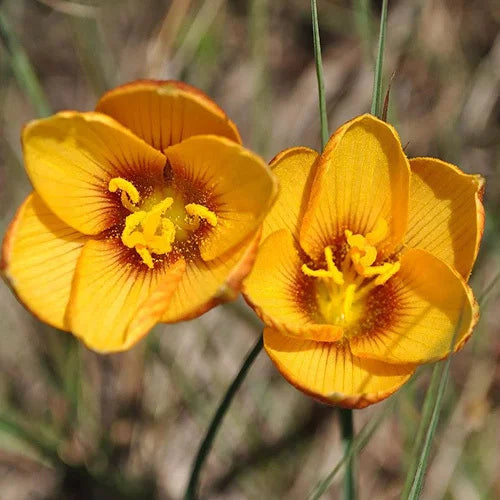
- Mature plants produce attractive yellow to golden-yellow, trumpet-shaped flowers.
- Flowering can be stimulated by suitable moisture following a relatively dry period.
- Seed-grown plants generally take longer to flower than established bulbs.
- Flowering time can vary considerably depending on temperature and moisture.
- Once established, the plant can produce offsets/bulblets that help it spread gradually.
🌡 Gulf Climate Tips
- In Kuwait, November–January is recommended for starting seeds.
- Protect young seedlings from direct summer heat.
- During warm periods, approximately 30–50% afternoon shade can be useful.
- Keep containers away from heat-reflecting walls and paving.
- Excellent drainage is essential during humid or rainy periods.
- During active growth, maintain moderate moisture.
- As the plant enters dormancy or becomes less active during extreme heat, reduce watering significantly.
- Avoid keeping dormant bulbs continuously wet.
- Once established, Habranthus tubispathus can tolerate considerable heat and relatively dry conditions.
Tip: Yellow Rain Lily is a good choice for Gulf gardens because it is relatively heat tolerant and does not require constantly wet soil. The key is to provide excellent drainage, moderate watering during active growth, and a much drier period during dormancy.
Share