
Iris Sibirica Uncorked
Iris Sibirica Uncorked
All Drops Store
Couldn't load pickup availability
1. About the Plant
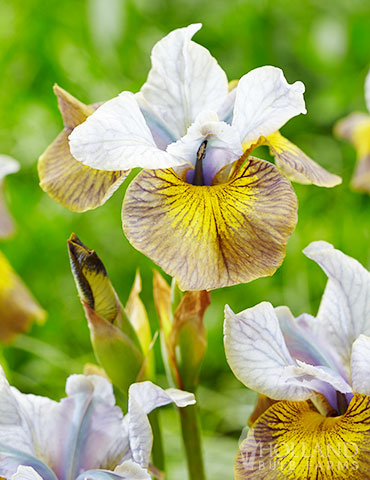
Iris sibirica ‘Uncorked’, commonly known as Siberian Iris, is an elegant herbaceous perennial admired for its distinctive flowers and graceful, upright foliage. This variety is valued for its rich wine-purple to deep reddish-purple flower tones, which add a dramatic touch to garden beds and borders.
Its narrow, sword-like green leaves form attractive clumps, while the flowers rise above the foliage on slender stems. Siberian Iris is particularly attractive when planted in groups and can also be grown in large containers.
It prefers cooler growing conditions and consistently moist soil, so it requires extra attention during the hot Gulf summer.
-
Plant type: Herbaceous perennial
-
Flower colour: Rich wine-purple to deep reddish-purple tones
-
Foliage: Narrow, upright, sword-like green leaves
-
Approximate height: 60–90 cm, depending on growing conditions
-
Growth habit: Clump-forming
-
Flowering season: Spring to early summer
-
Suitable for: Garden beds, borders, and large containers
2. Best Planting Time in the Gulf Area
The best time to plant Iris sibirica ‘Uncorked’ seedlings in the Gulf is from October to January.
For Kuwait, November to December is generally the most suitable period. Cooler temperatures during these months help the roots establish before the arrival of intense summer heat.
Avoid transplanting during hot weather, as young seedlings can suffer from heat and moisture stress.
3. Planting Instructions
-
Choose a location with good air circulation and protection from strong afternoon sunlight.
-
Prepare a planting hole slightly wider than the seedling's root ball.
-
Carefully remove the seedling from its nursery container without damaging the roots.
-
Place it in the hole at the same depth it was growing in its original container.
-
Keep the crown, where the leaves emerge from the roots, at or slightly above soil level. Do not bury it deeply.
-
Fill around the roots with prepared soil and gently firm it.
-
Water thoroughly after planting.
-
Leave approximately 40–50 cm between plants to allow the clumps to develop.
4. Sunlight Requirements
Siberian Iris grows best in full sun to partial shade. In the Gulf, protection from strong afternoon sunlight is important.
-
Provide approximately 4–6 hours of gentle sunlight, preferably in the morning.
-
Give the plant partial shade during the afternoon.
-
Protect it from reflected heat from walls, paving, and concrete.
-
Avoid deep shade, as insufficient sunlight may reduce flowering.
5. Watering
Siberian Iris prefers consistently moist soil and needs regular watering, particularly during active growth.
-
Water thoroughly after planting.
-
Keep the soil evenly moist while the seedling establishes.
-
Water when the soil surface begins to dry.
-
Increase watering during hot, dry weather as needed.
-
Do not allow the root zone to dry out completely.
-
Ensure excess water can drain away to prevent root problems.
In Gulf conditions, check soil moisture frequently, especially for plants growing in containers.
6. Soil Requirements
Iris sibirica ‘Uncorked’ prefers fertile, humus-rich soil that retains moisture while allowing excess water to drain.
A suitable growing mixture can include:
-
Good-quality garden soil
-
Mature organic compost
-
Coco peat or another moisture-retaining material
-
Perlite or coarse sand to improve drainage
The soil should remain moist but not permanently waterlogged.
7. Fertilizing
-
Incorporate mature compost into the soil before planting.
-
Apply a balanced slow-release fertilizer during active growth.
-
Feed lightly in early spring to support healthy foliage and flowering.
-
Avoid excessive nitrogen, which can encourage leaf growth at the expense of flowers.
-
Avoid heavy fertilizing when the plant is stressed by extreme heat.
8. Flowering and Maintenance
Iris sibirica ‘Uncorked’ generally flowers during spring to early summer, depending on local temperatures and growing conditions.
For healthy growth:
-
Remove faded flowers to maintain a neat appearance.
-
Cut flower stalks after flowering has finished.
-
Remove dead or damaged leaves.
-
Maintain consistent soil moisture during active growth.
-
Divide overcrowded clumps when necessary, preferably during a mild season.
In Kuwait and other Gulf countries, the plant may struggle during extreme summer heat. Afternoon shade and careful watering can help it remain healthier.
9. Growing in Containers
Siberian Iris can be grown in large containers if its moisture requirements are managed carefully.
-
Choose a pot at least 35–40 cm wide with drainage holes.
-
Use fertile, moisture-retentive but well-draining potting mix.
-
Keep the crown at or slightly above soil level.
-
Water regularly to prevent the potting mix from drying out.
-
Place the container where it receives morning sunlight and afternoon shade.
-
Avoid dark containers exposed to direct afternoon sun, as they can become excessively hot.
10. Tips for Growing in the Gulf Area
-
Plant during the cooler months to encourage root establishment.
-
Choose a location with morning sunlight and afternoon shade.
-
Maintain consistent soil moisture, particularly during active growth.
-
Apply a light layer of mulch to reduce moisture loss, keeping it away from the crown.
-
Protect the plant from hot, dry winds.
-
Monitor container plants closely because their soil dries and heats up faster.
-
Provide additional summer protection, as Siberian Iris is naturally better suited to cooler climates.
Gardening Tip: The deep wine-coloured flowers of ‘Uncorked’ can create a striking contrast with its green foliage and lighter-coloured garden plants. In Kuwait, morning sunlight, afternoon shade, and consistently moist, well-drained soil will help support healthy growth.
Suitable for: Kuwait, Saudi Arabia, UAE, Qatar, Bahrain, Oman, and other Gulf countries, with appropriate summer shade and moisture management.
Share