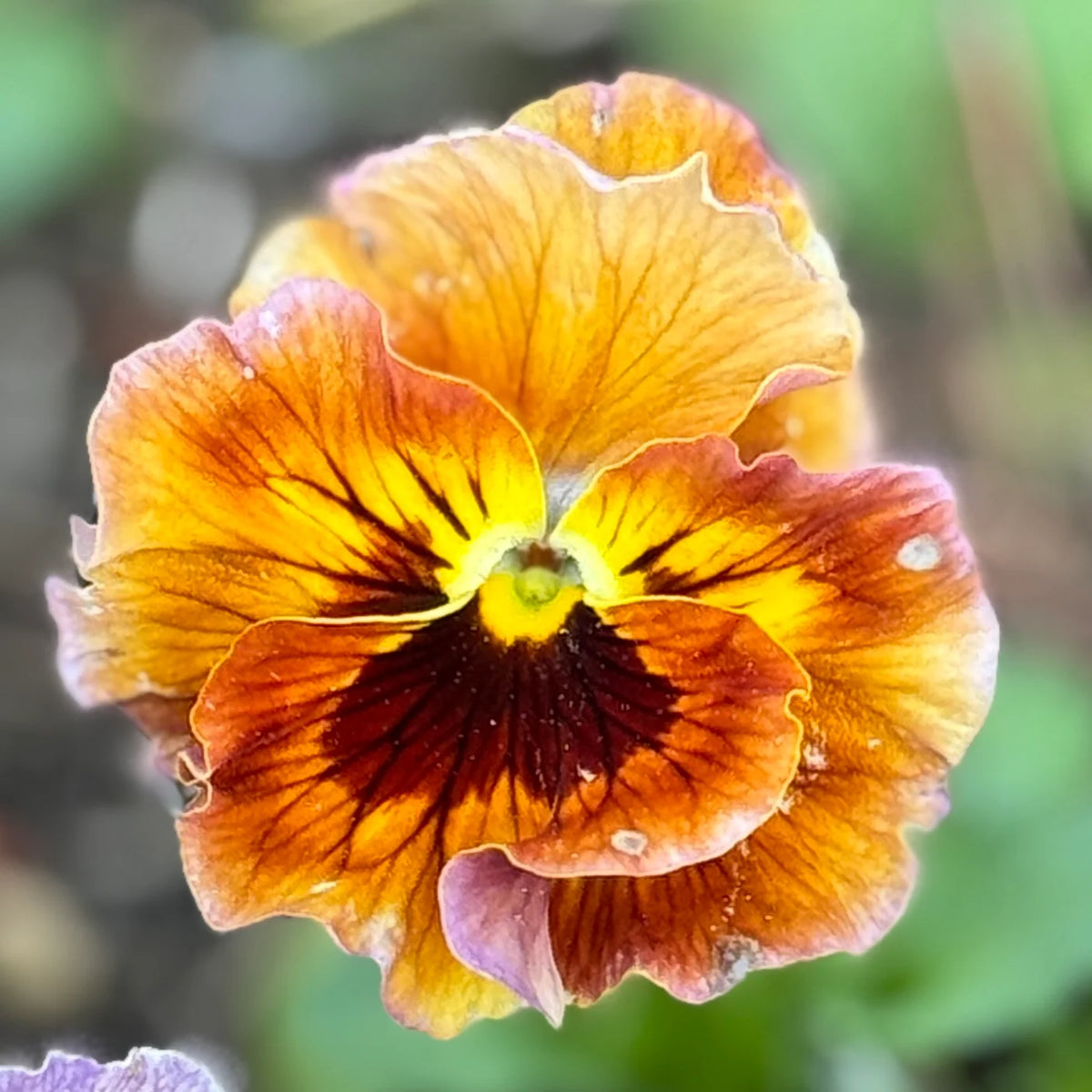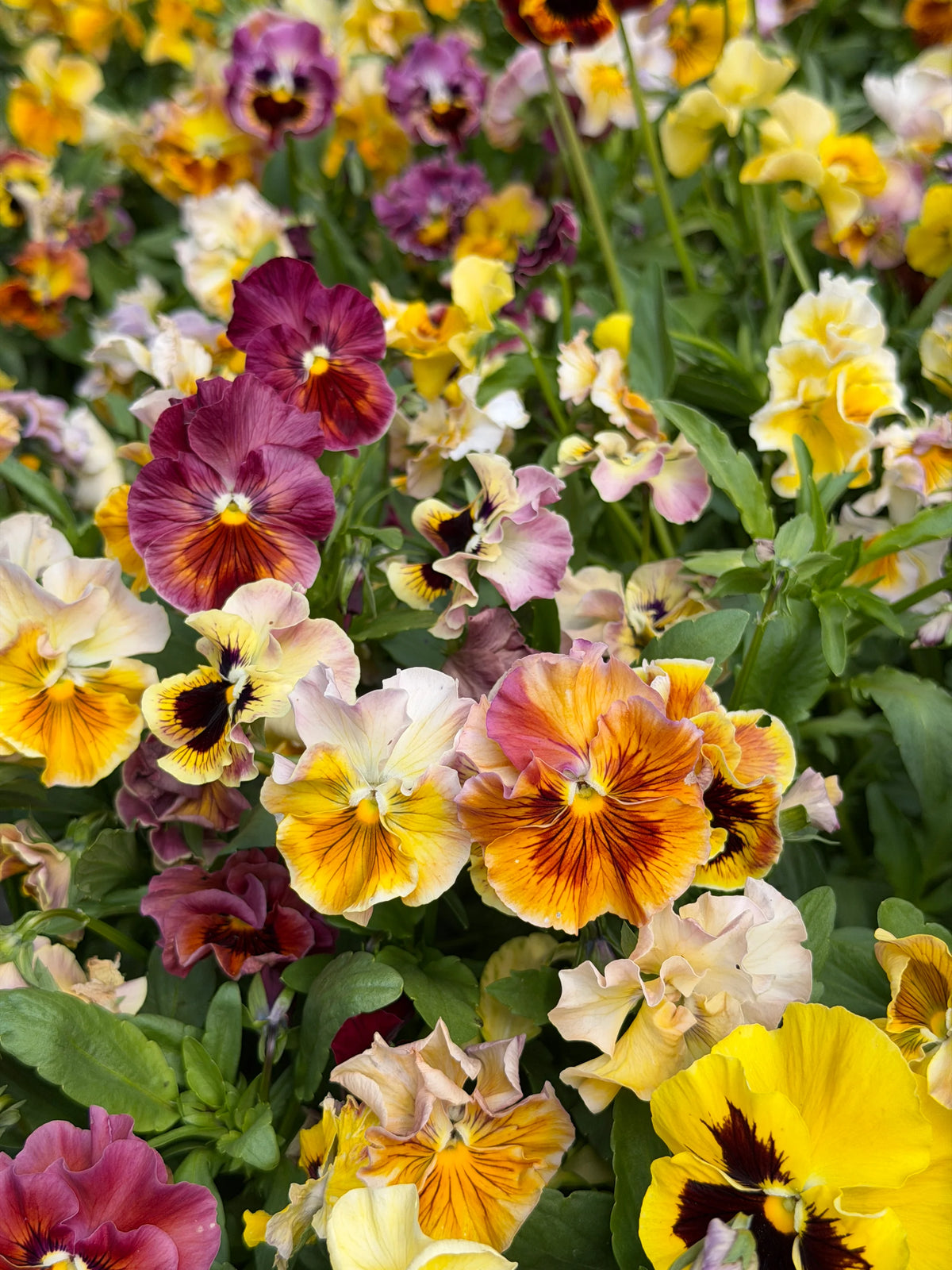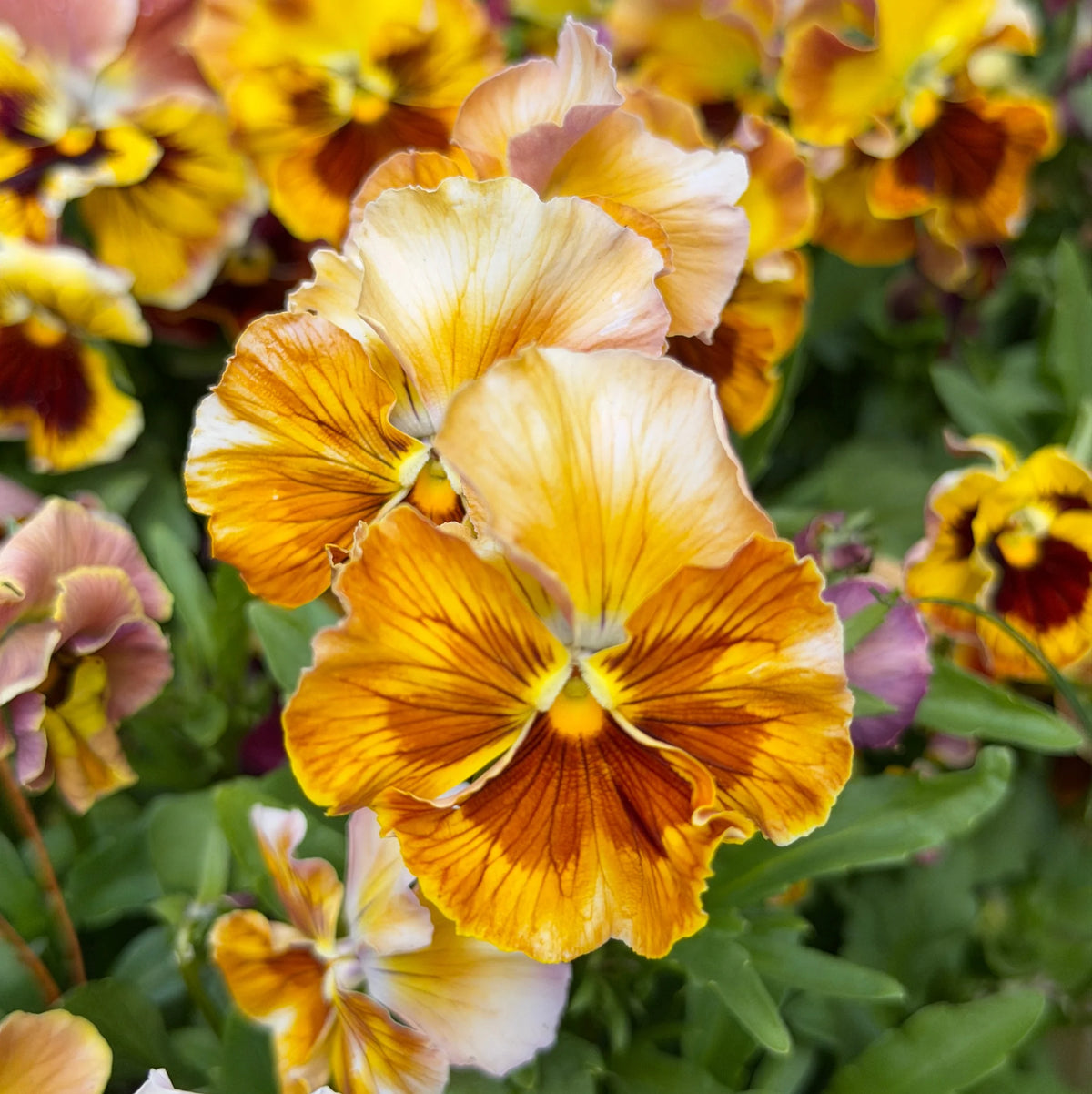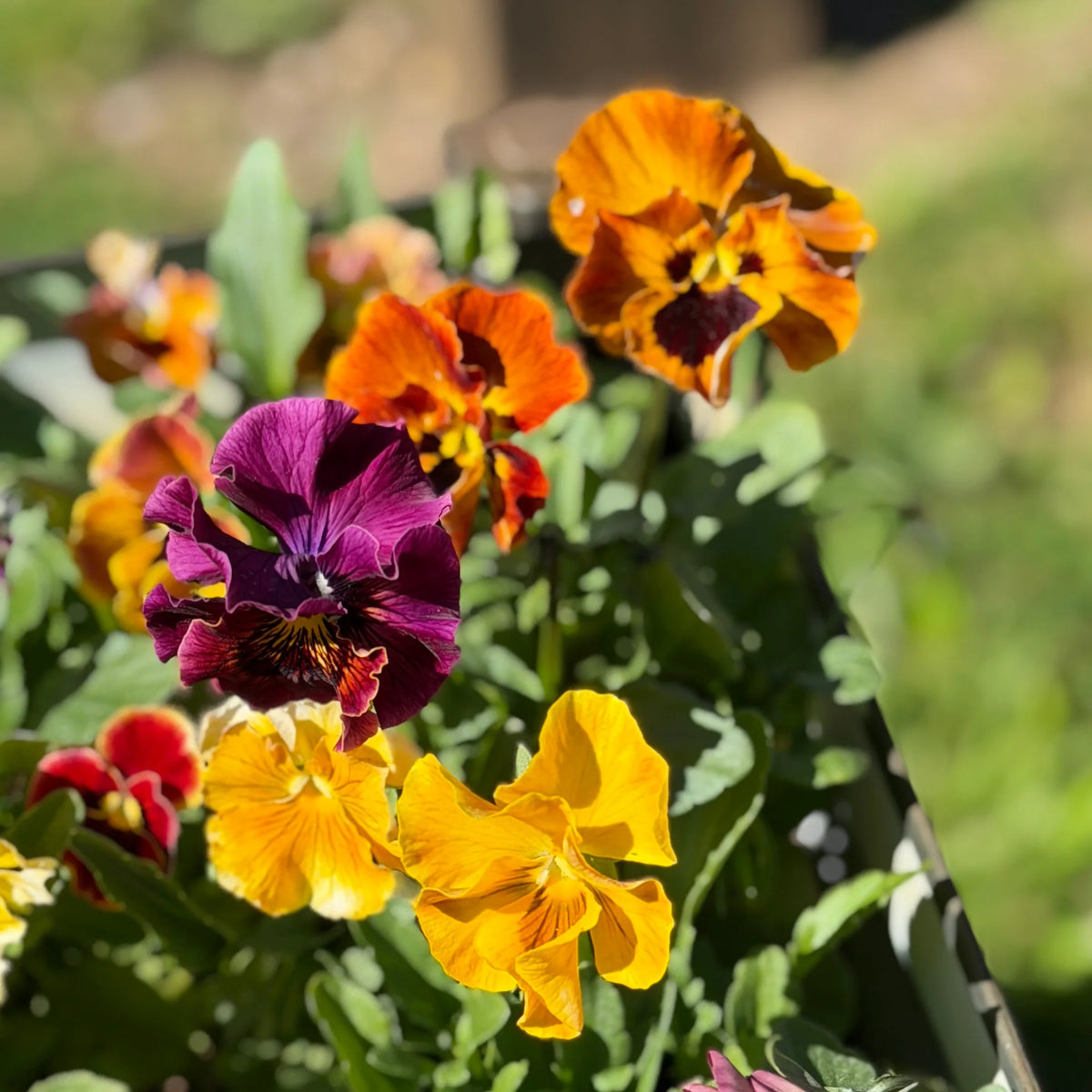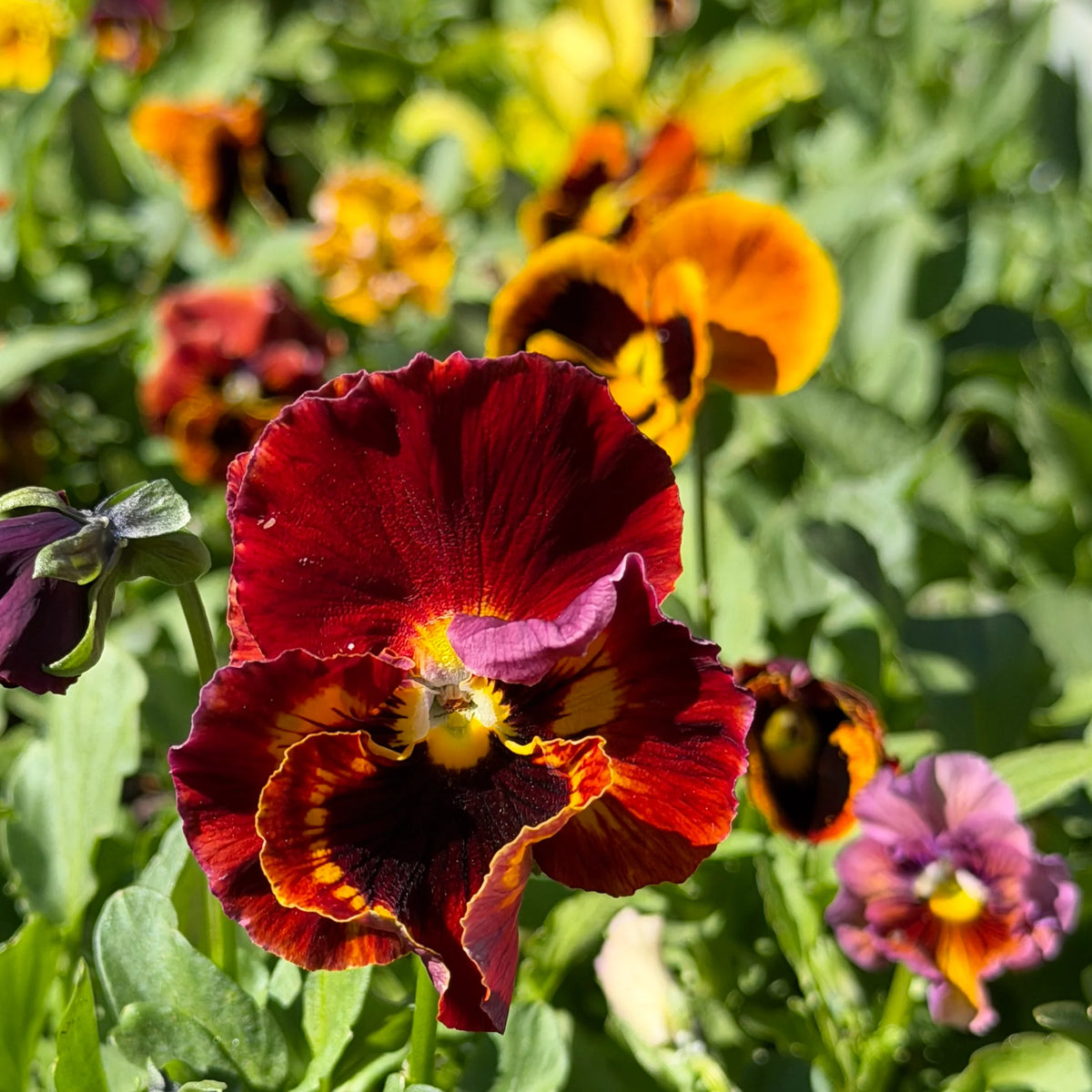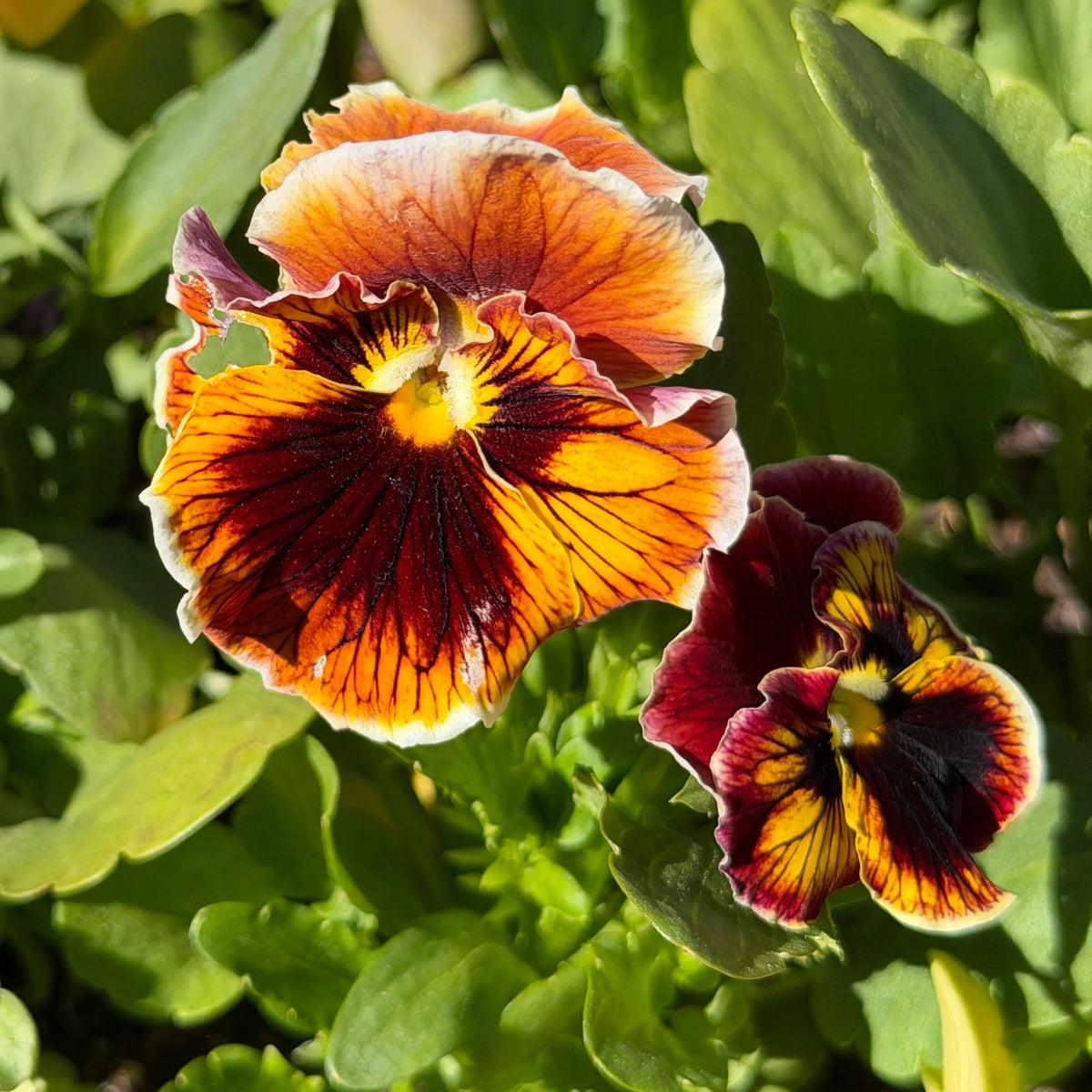


Italian Pansy 'Flamenco Terracotta'
Italian Pansy 'Flamenco Terracotta'
Southern Highlands
Country of origin: Australia
Couldn't load pickup availability
25 Seeds
1. About the Plant
Italian Pansy ‘Flamenco Terracotta’ is an ornamental flowering variety of pansy (Viola × wittrockiana), admired for its warm terracotta-inspired flower colours, creating an attractive display in winter gardens and decorative containers.
Its compact growth and colourful blooms make it suitable for flower beds, borders, pots and window boxes. Pansies are cool-season plants that perform best in mild temperatures and are sensitive to extreme heat.
In the Gulf region, this variety is best grown during autumn, winter and early spring.
2. Best Sowing Time in the Gulf Area
-
Kuwait: September to November, with October being a good time to start seeds.
-
Other Gulf countries: September to December, depending on local temperatures.
-
Start seeds early enough to allow seedlings to establish before winter flowering.
-
Avoid sowing outdoors during periods of extreme heat.
3. Seed Sowing Instructions
-
Prepare a seed tray or small pots with fine, sterile and well-drained seed-starting mix.
-
Moisten the growing medium before sowing.
-
Scatter the seeds evenly over the surface, leaving a little space between them.
-
Cover the seeds with a very thin layer of fine compost or vermiculite, approximately 2–3 mm deep. Pansy seeds generally germinate best in darkness.
-
Water gently with a fine spray to avoid moving the seeds.
-
Cover the tray with a transparent lid or plastic to maintain humidity, allowing some ventilation.
-
Keep the growing medium consistently moist but never waterlogged.
4. Germination
-
Ideal temperature: 15–20°C.
-
Germination time: Usually 10–20 days, although some seeds may take longer.
-
Keep the seed tray in a cool, shaded place during germination.
-
Once seedlings emerge, remove the cover and provide bright, indirect light.
-
Protect young seedlings from direct midday sunlight and excessive heat.
5. Transplanting Seedlings
When seedlings develop 2–3 true leaves and are large enough to handle:
-
Carefully transplant each seedling into an individual small pot.
-
Hold seedlings by their leaves rather than their delicate stems.
-
Use a light, fertile and well-drained potting mix.
-
Water gently and maintain moderate soil moisture while the roots establish.
-
Transplant outdoors when seedlings are strong and temperatures are suitable.
Leave approximately 15–20 cm between plants in garden beds to allow good air circulation and healthy growth.
6. Sunlight
Pansies prefer bright light and cool growing conditions.
In the Gulf:
-
Provide gentle morning sunlight.
-
Offer partial afternoon shade.
-
Protect plants from intense midday sun and hot, dry winds.
-
Around 4–6 hours of mild sunlight daily is generally suitable.
7. Watering
-
Keep the growing medium evenly moist during germination.
-
Water young seedlings gently to protect their delicate roots.
-
Once established, water when the top layer of soil begins to dry.
-
Avoid overwatering and standing water, which can cause root rot.
-
Water near the soil surface rather than directly over the flowers whenever possible.
8. Soil Requirements
Italian pansies grow best in fertile, loose and well-drained soil rich in organic matter.
A suitable growing mix can contain:
-
40% quality garden soil or potting soil.
-
30% mature compost.
-
20% perlite or coarse sand.
-
10% coco peat.
The soil should retain enough moisture for healthy growth while allowing excess water to drain freely.
9. Fertilizing
-
Add a small amount of mature compost before transplanting.
-
Once seedlings are established, apply a balanced liquid fertilizer at half strength every 2–3 weeks.
-
Avoid excessive nitrogen, which encourages leaf growth at the expense of flowers.
-
Reduce feeding if plants become stressed by rising temperatures.
10. Flowering
Under suitable cool conditions, plants generally begin flowering approximately 10–14 weeks after sowing, depending on growing conditions.
‘Flamenco Terracotta’ is grown for its warm-toned ornamental flowers, which create an attractive seasonal display. Flowering in the Gulf is usually best during winter and early spring.
Remove faded flowers regularly to encourage further blooming and maintain a neat appearance.
11. Pruning and Maintenance
-
Remove faded flowers and damaged leaves regularly.
-
Pinch back weak or stretched growth if necessary to encourage a compact shape.
-
Maintain suitable spacing and good air circulation.
-
Monitor for aphids, slugs, snails and fungal diseases.
-
Avoid keeping foliage continuously wet, especially in humid conditions.
12. Growing in Containers
Italian Pansy ‘Flamenco Terracotta’ is suitable for pots, window boxes and decorative containers.
-
Choose a container with drainage holes.
-
Use fertile, moisture-retentive but well-drained potting mix.
-
Allow approximately 15–20 cm between plants.
-
Place containers in a bright location with morning sunlight and afternoon shade.
-
Check soil moisture regularly, as containers can dry out quickly in Gulf weather.
13. Tips for Growing in the Gulf Area
-
Start seeds during the cooler part of autumn.
-
Germinate seeds in a cool place, ideally around 15–20°C.
-
Protect young plants from strong sunlight and hot winds.
-
Provide afternoon shade as temperatures rise.
-
Keep the soil moist but never saturated.
-
Grow the plants mainly during winter and early spring, as extreme summer heat can shorten their flowering season.
Suitable for: Kuwait, Saudi Arabia, UAE, Qatar, Bahrain and Oman, particularly for winter and early-spring flowering.
Share