
1
/
of
1
Karonda
Karonda
No reviews
Regular price
1.000 KWD
Regular price
1.250 KWD
Sale price
1.000 KWD
Shipping calculated at checkout.
Quantity
Couldn't load pickup availability
3 Seeds
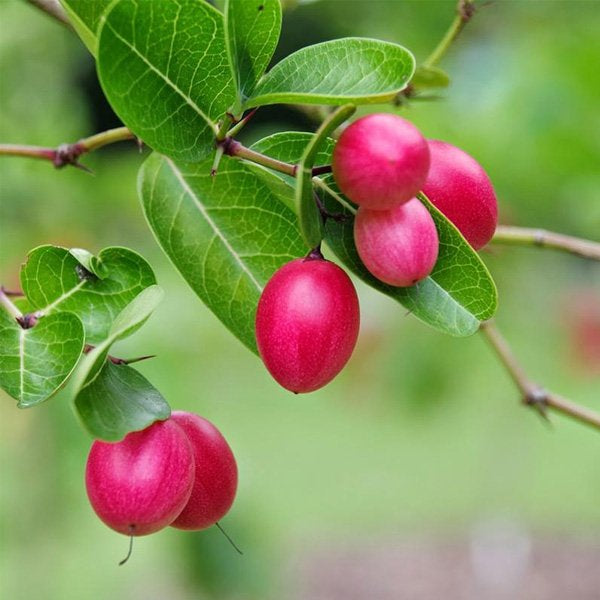
Karonda, also known as Bengal Currant, Christ's Thorn, or Carissa carandas, is a hardy evergreen, thorny shrub native to South Asia. It produces small pink, red, or deep purple fruits with a pleasantly tart flavor that becomes sweeter as they ripen. The fruits are rich in vitamin C, iron, calcium, antioxidants, and dietary fiber. Karonda is commonly used for fresh consumption, pickles, jams, jellies, chutneys, syrups, and juices. It is highly tolerant of heat, drought, and saline conditions, making it an excellent fruit plant for the Gulf region.
Best Planting Time
- September to November (recommended)
- February to March (also suitable)
- Avoid sowing during the hottest summer months.
Seed Preparation
- Extract seeds from fully ripe fruits.
- Wash thoroughly to remove all fruit pulp.
- Soak seeds in warm water (25–30°C) for 12–24 hours before sowing.
- Sow fresh seeds whenever possible, as viability decreases with storage.
- No cold stratification is required.
Soil Preparation
Use fertile, well-drained soil.
Recommended mix:
- 40% Coco peat
- 30% Compost
- 20% Garden soil
- 10% Perlite or coarse sand
Ideal soil pH:
- 6.0–7.5
Sowing Method
- Sow seeds in seed trays or nursery pots.
- Plant seeds 1–1.5 cm deep.
- Cover lightly with soil.
- Keep the growing medium evenly moist until germination.
Temperature & Light
- Ideal germination temperature: 25–32°C
- Ideal growing temperature: 25–38°C
- Requires 6–8 hours of direct sunlight daily.
- Young seedlings benefit from light afternoon shade during extremely hot weather.
Watering
- Keep the soil moist during germination.
- Once established, water deeply when the top 3–5 cm of soil becomes dry.
- Mature plants are highly drought tolerant.
Germination Time
- 15–35 days
Transplanting
- Transplant seedlings when they have:
- 4–6 true leaves
- Height of 15–25 cm
- Space plants:
- 2–3 m apart
- Space rows:
- 3–4 m apart
Fruiting
- Plants grown from seed usually begin producing fruit after:
- 2–4 years
- Harvest fruits when they become dark red to deep purple and slightly soft.
Gulf Climate Tips
- Karonda is one of the best fruit shrubs for Gulf climates because of its excellent tolerance to heat and drought.
- Apply organic mulch to conserve soil moisture.
- Fertilize every 6–8 weeks with a balanced fertilizer during active growth.
- Light annual pruning encourages branching and higher fruit production.
- Karonda is ideal for home gardens, edible hedges, orchards, large containers, and coastal landscapes due to its tolerance of wind and mild salinity.
Share