
Moon and Stars Watermelon
Moon and Stars Watermelon
Couldn't load pickup availability
20 Seeds
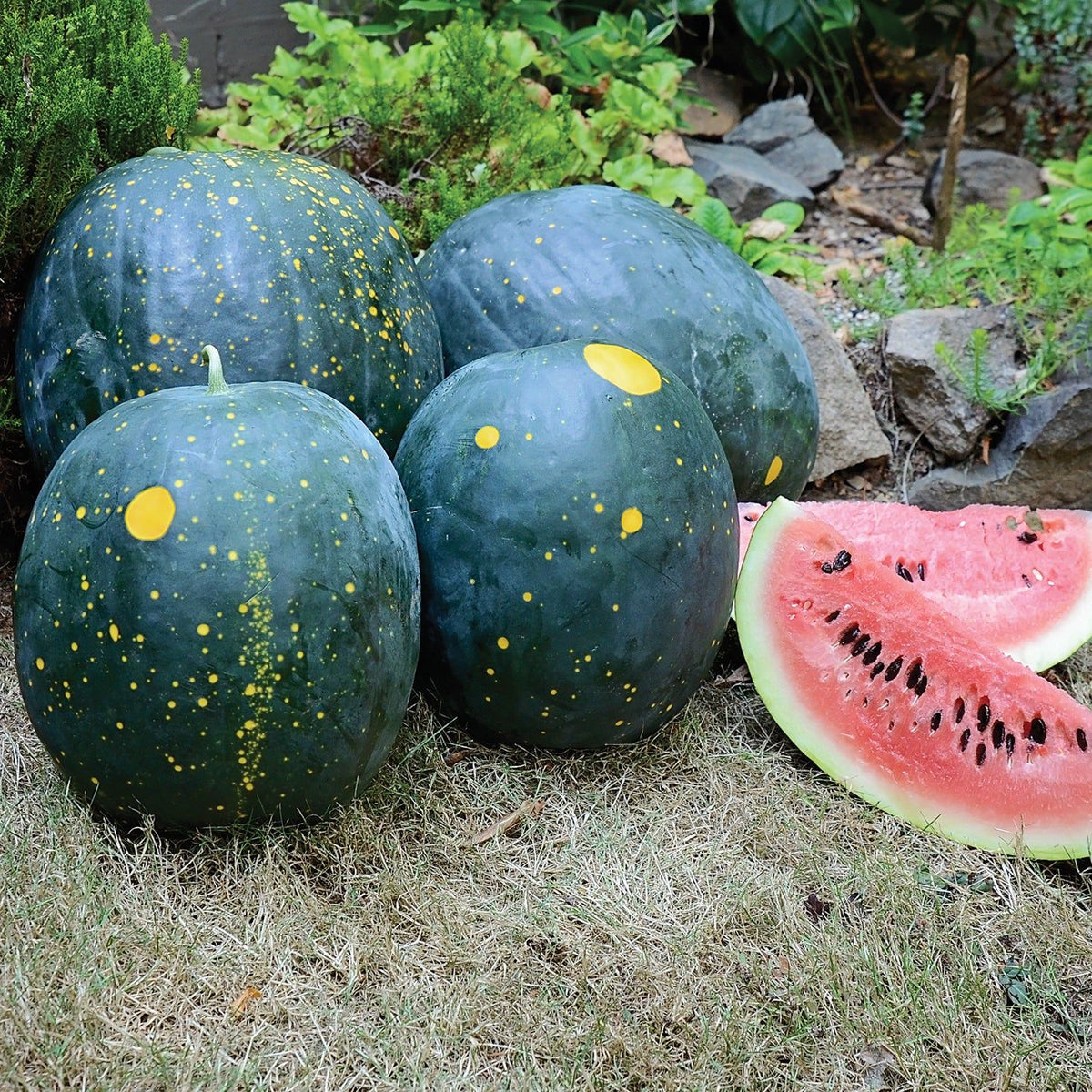
Moon and Stars is a famous heirloom watermelon known for its unusual dark green rind covered with small yellow “stars” and larger yellow “moon” markings. The foliage can also show attractive yellow spotting. The variety is generally grown for its sweet, juicy flesh, most commonly bright red, although other flesh-color forms also exist.
The vines are vigorous and require considerable growing space, although some sources describe the variety as relatively compact compared with certain large watermelon types. Fruits commonly reach around 10–15 lb (4.5–6.8 kg), while larger fruits can occur under excellent conditions. Maturity is generally around 90–100 days from sowing, depending on conditions and the seed source.
🌱 Best Planting Time
- Gulf region: February–April and September–October
- Kuwait: March–April and September–October
- Best Kuwait periods: March–April and September–October.
- Plant only when the soil is sufficiently warm.
- Avoid the coldest winter period and the peak of Gulf summer heat.
Watermelon is a warm-season crop. Moon and Stars seeds germinate best in warm soil, with sources generally recommending around 21–30°C or warmer for reliable germination and growth.
🌿 How to Plant the Seeds
- Choose a location with full sun and excellent drainage.
- Prepare loose, fertile soil and incorporate mature compost.
- Plant the seeds directly into the ground when the soil is warm.
- Sow seeds approximately 1–2.5 cm deep.
- Place 3–5 seeds in a small mound or planting area.
- Water gently after sowing.
- Keep the soil consistently moist until germination.
- Once seedlings are established, keep the strongest plants and remove excess seedlings.
- Allow approximately 90–120 cm between plants and around 1.8–2.5 m between rows, depending on available space and how much the vines are allowed to spread.
- Mulch around established plants to conserve moisture and suppress weeds.
Direct sowing is recommended when conditions are warm, while young plants can also be started indoors and transplanted carefully.
🌡️ Germination
- Soil temperature: approximately 21–30°C
- Germination: usually around 5–10 days, although it can vary.
- Keep the seedbed moist but not waterlogged.
- Provide strong light immediately after seedlings emerge.
- Avoid excessively cold soil, which can slow or prevent germination.
🌱 Transplanting
If starting seeds indoors:
- Start approximately 3–4 weeks before the intended outdoor planting date.
- Use individual pots to minimize root disturbance.
- Transplant while seedlings are still young and vigorous.
- Harden plants gradually before exposing them to strong Gulf sunlight.
- Handle the root ball carefully because watermelon roots do not respond well to unnecessary disturbance.
Direct sowing is generally preferable when the Gulf soil is already warm.
☀️ Sunlight
- Provide full sun.
- Aim for at least 6–8 hours of direct sunlight daily.
- Strong sunlight supports vigorous vine growth and good fruit development.
- During extreme Gulf heat, young seedlings may benefit from some afternoon protection.
- Maintain good airflow around the vines.
Moon and Stars is specifically recommended for full-sun conditions.
💧 Watering
- Keep the soil evenly moist during germination and early growth.
- Water deeply rather than giving frequent shallow watering.
- Provide consistent moisture during flowering and fruit development.
- Avoid severe drying during fruit formation.
- Do not keep the soil constantly saturated.
- As fruits approach maturity, avoid excessive irrigation because overly wet conditions can contribute to fruit splitting and may reduce flavor.
🌱 Soil
Use:
- Loose, fertile, well-draining soil
- Sandy loam or light loam
- Mature compost or well-decomposed organic matter
- Perlite, pumice or coarse material for improving drainage in containers
Moon and Stars performs best in moist but well-drained soil. A slightly acidic to neutral soil is suitable; one growing source gives approximately pH 6.0–7.0, while another gives 6.5–7.5.
🌿 Fertilizing
- Add mature compost before planting.
- Watermelon is a relatively heavy feeder, so maintain good soil fertility.
- Use a balanced fertilizer during early vine growth.
- Once flowering and fruit development begin, maintain balanced nutrition with adequate potassium.
- Avoid excessive nitrogen, which can encourage leaves and vines at the expense of fruit production.
🌸 Flowering & Fruit Development
Moon and Stars produces separate male and female flowers on the same plant. Bees and other pollinating insects are important for successful fruit set.
The developing fruit has its characteristic dark green rind with yellow spots, including larger “moon” markings and smaller “star” markings. The foliage can also display yellow spotting.
The classic form has sweet red flesh, although Moon and Stars selections with other flesh colors are also available.
🍉 Harvesting
Moon and Stars generally takes around 90–100 days to mature, although the exact timing depends on growing conditions and the seed source.
Useful maturity signs include:
- The tendril closest to the fruit becomes brown and dry.
- The ground spot changes from white or pale green to yellow or creamy yellow.
- The rind becomes less glossy.
- The fruit reaches its expected mature size.
- The fruit may produce a deeper, more hollow sound when tapped.
Use several signs together rather than relying on only one.
🪴 Growing Moon and Stars Watermelon in Containers
It can be grown in a large container, but the vines need substantial space.
- Use a large container of at least 50–60 L per plant, preferably larger.
- Ensure excellent drainage.
- Allow vines to trail along the ground or over a suitable growing area.
- Avoid overcrowding.
- Monitor soil moisture closely because containers dry quickly in Gulf heat.
- Place developing fruits on a board, straw or another dry surface to keep them away from continuously damp soil.
🐝 Pollination
Good pollination is essential for fruit development.
- Encourage bees and other pollinators.
- Avoid applying insecticides while flowers are open whenever possible.
- If pollinating insects are scarce, hand-pollination can be attempted by transferring pollen from a freshly opened male flower to a female flower.
🔥 Gulf Climate Tips
- Moon and Stars is a heat-loving watermelon, making it suitable for warm-season Gulf growing.
- In Kuwait, March–April is a good spring planting window.
- September–October can provide another useful growing period as temperatures begin to moderate.
- Avoid planting during the most extreme summer heat.
- Protect young seedlings from intense afternoon sun until they become established.
- Use mulch to reduce soil temperature fluctuations and conserve moisture.
- Maintain excellent drainage, especially in heavy Gulf soils.
- Give the vines plenty of space to spread.
- Provide reliable irrigation during flowering and fruit enlargement.
- Reduce excessive watering as the fruit approaches maturity.
- Keep developing fruits off persistently damp soil.
🌱 Growing Tip: For the best results in Kuwait and the Gulf, sow Moon and Stars Watermelon when the soil is warm, preferably during March–April or September–October. Give the vines full sun, plenty of space, deep consistent watering and excellent drainage, then avoid excessive irrigation as the fruits approach maturity.
Share