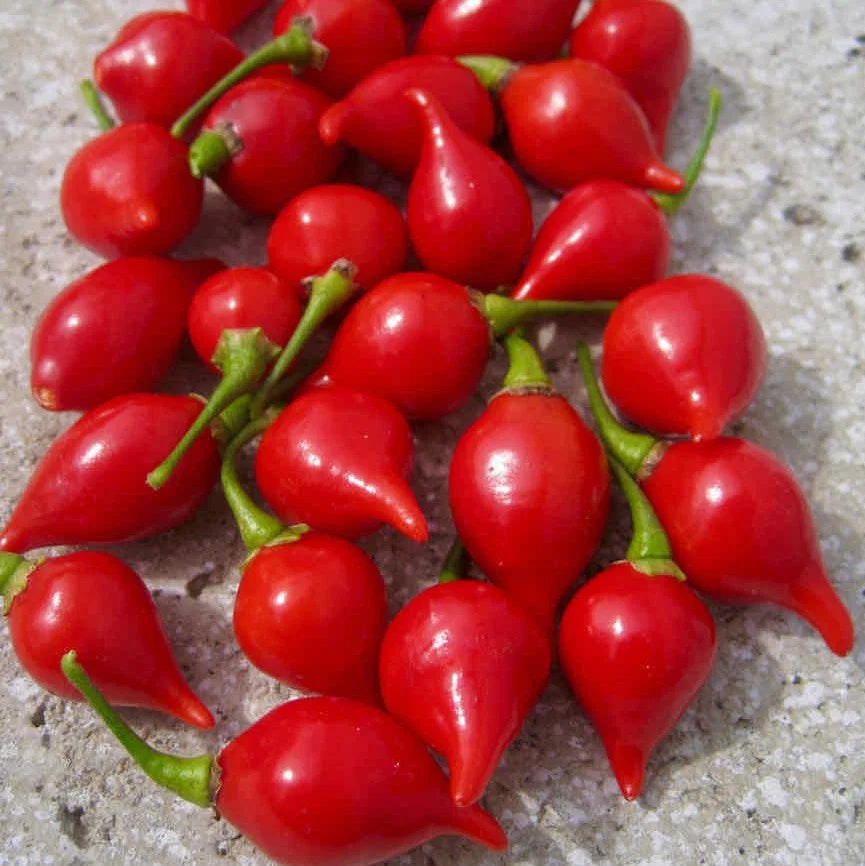

Pepper Button Red
Pepper Button Red
Couldn't load pickup availability
20 Seeds
🌱 Best Sowing Time
For the Gulf climate, sow during the cooler part of the growing season.
- Gulf Region: September–February
- Kuwait: October–January
- UAE & Qatar: September–February
- Saudi Arabia & Bahrain: September–February
- Oman: September–February, depending on local temperature and elevation
Avoid starting seeds during the peak summer heat, when temperatures can become too high for good germination and fruit set.
🌿 How to Sow
- Fill a seed tray or small pots with a light, well-draining seed-starting mix.
- Sow seeds about 5–10 mm deep.
- Cover lightly with soil and gently water.
- Keep the growing medium consistently moist but never waterlogged.
- Place the tray somewhere warm with bright light.
- Once seedlings emerge, provide plenty of light and good ventilation.
🌡️ Germination
- Ideal temperature: 24–30°C
- Germination time: approximately 7–14 days
- Germination may be slower if temperatures are too cool.
- Temperatures above approximately 32–35°C can reduce germination and weaken young seedlings.
- Do not allow the seed-starting mix to dry completely.
🌱 Seedling Care
When seedlings emerge:
- Provide strong, bright light.
- Give gentle morning sunlight when possible.
- Protect seedlings from intense Gulf afternoon sun.
- Water when the surface begins to dry.
- Maintain good airflow to reduce fungal problems.
- Thin crowded seedlings so they do not compete for light.
🌿 Transplanting
Transplant when seedlings have several true leaves and are strong enough to handle outdoor conditions.
- Plant spacing: 30–45 cm
- Row spacing: 45–60 cm
- Container: 10–20 L per plant is recommended
- Harden seedlings gradually before moving them into full outdoor conditions.
- Transplant during the cooler part of the day and water thoroughly afterward.
☀️ Sunlight
Pepper plants prefer approximately 6–8 hours of good sunlight.
In the Gulf:
- Morning sun is excellent.
- Protect plants from intense afternoon summer sunlight.
- Use approximately 30–50% afternoon shade during very hot periods.
- Avoid placing containers on extremely hot concrete, metal, or rooftops.
💧 Watering
- Keep soil evenly moist, especially during flowering and fruit development.
- Water deeply rather than giving very small amounts frequently.
- Increase watering during hot, dry weather.
- Avoid both drought stress and waterlogging.
- Water around the base rather than constantly wetting the leaves.
- Mulching can help maintain soil moisture and reduce root-zone temperature.
🌱 Soil
Use fertile, loose, well-draining soil.
A suitable container mix can include:
- Quality potting soil or coco peat
- Aged compost
- Perlite or pumice
- A small amount of coarse sand if additional drainage is needed
Good drainage is particularly important in Gulf conditions.
🌿 Fertilizing
- Begin light feeding after the seedlings are established.
- Use a balanced vegetable fertilizer during early growth.
- Once flowering begins, provide adequate phosphorus and potassium.
- Avoid excessive nitrogen, which can produce large leaves with fewer fruits.
- Feed moderately and regularly rather than using very strong fertilizer doses.
🌶️ Fruiting
‘Button Red’ produces small red pepper fruits.
- Fruits can generally be harvested when they reach their characteristic mature red color.
- Regular harvesting can encourage continued production.
- If your seed supplier identifies this variety as ornamental or particularly hot, follow the supplier's information regarding whether the fruits are intended for eating.
🔥 Gulf Climate Tips
- Start seeds during the cooler Gulf months.
- Protect young plants from temperatures above 35°C.
- Provide afternoon shade during heatwaves.
- Containers allow you to move plants to a cooler or partially shaded location.
- Avoid reflected heat from walls, paving, and metal surfaces.
- Maintain good ventilation, particularly in humid coastal areas.
- Extreme heat can reduce flowering, pollination, fruit set, and fruit quality.
🌱 Growing Tip: Start ‘Button Red’ peppers during the cooler Gulf season, give seedlings warm conditions for germination, then provide strong morning sunlight and protection from intense afternoon heat.
Share