

1
/
of
2
Rainbow Flint Corn
Rainbow Flint Corn
No reviews
Regular price
1.200 KWD
Regular price
1.400 KWD
Sale price
1.200 KWD
Shipping calculated at checkout.
Quantity
Couldn't load pickup availability
10 Seeds
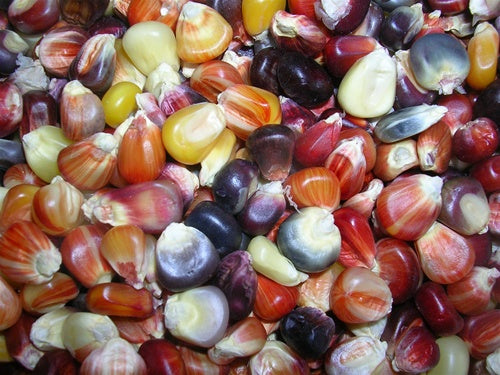
Rainbow Flint Corn is a colorful flint-type maize known for its hard, multicolored kernels. It is primarily grown for dry grain, decorative use, grinding into cornmeal, or traditional cooking. In the Gulf, it performs best when planted during the cooler warm-season periods rather than the extreme summer.
🌱 Best Growing Season in the Gulf
- Best sowing time: September–November.
- A second planting can be made during January–February where winter temperatures remain mild.
- Avoid: June–August because extreme heat can interfere with pollination and grain development.
- Best soil temperature for germination: 18–30°C.
🌿 Seed Sowing
- Choose a sunny location with fertile, well-drained soil.
- Sow seeds directly into the soil.
- Plant seeds approximately 3–5 cm deep.
- Space plants 20–30 cm apart.
- Leave 60–75 cm between rows.
- Water immediately after sowing.
- Keep the soil consistently moist until seedlings are established.
⏱ Germination
- Seeds generally germinate within 5–10 days under suitable conditions.
- Keep the soil moist but avoid waterlogging.
- Once seedlings emerge, provide plenty of direct sunlight.
🌱 Growing & Care
- Sunlight: 6–8+ hours of direct sunlight daily.
- Soil: Fertile, loose, well-drained soil enriched with compost or organic matter.
- Watering: Regular watering is essential, especially during tasseling, flowering, and ear development.
- Fertilizing: Apply a nitrogen-rich fertilizer during early growth, followed by a balanced fertilizer during ear development.
- Use mulch around the plants to reduce evaporation and protect roots from Gulf heat.
🌽 Pollination
- Plant in a block or several short rows, rather than one long row.
- Good plant density helps wind pollination and improves kernel formation.
- Avoid growing only a few isolated plants.
🌾 Harvest
- Rainbow Flint Corn is generally harvested when the ears and kernels are fully mature and dry.
- Allow the husks to dry and turn brown before harvesting for dry grain.
- After harvest, dry the ears thoroughly in a well-ventilated, dry location before storage.
- The colorful kernels can be used for decorative purposes, grinding, cornmeal, or traditional cooking, depending on the variety.
🌡 Gulf Climate Tips
- Avoid the extreme summer heat.
- During unusually hot periods, provide light afternoon shade to young plants.
- Drip irrigation is recommended for efficient water use.
- Water early in the morning to reduce evaporation.
- Protect young plants from strong, hot, drying winds.
- Ensure excellent drainage to prevent root problems.
Share