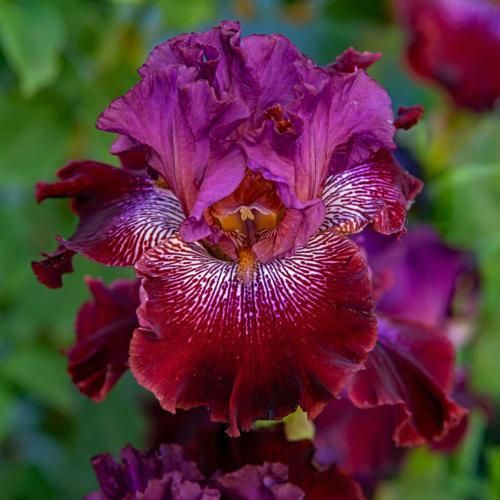

Red Bearded Iris
Red Bearded Iris
Couldn't load pickup availability
3 Rhizomes
Red Bearded Iris is a beautiful perennial grown from fleshy rhizomes, not true bulbs. The rhizomes produce upright, sword-shaped foliage and attractive red, deep red, burgundy, or reddish-toned flowers with the characteristic "beard" on the lower petals, depending on the cultivar. Bearded iris generally performs best in full sun and very well-drained soil.
For Gulf gardens, good drainage is especially important. Keeping the rhizome constantly wet can encourage rhizome rot, while the upper surface of the rhizome should receive sunlight to encourage flowering.
🌱 Best Planting Time in the Gulf
- Gulf region: September–December
- Kuwait: October–December
- Best period: October–November
- Avoid planting during the peak summer heat.
- Planting during the cooler season gives the rhizomes time to establish before the hottest part of the year.
🌿 How to Plant the Rhizomes
- Select a sunny location with excellent drainage.
- Loosen the soil to approximately 20–25 cm deep.
- If the soil is heavy, improve drainage with compost and coarse material such as perlite, pumice, or coarse grit.
- Make a shallow hole and create a small mound of soil in the center.
- Place the iris rhizome horizontally on top of the mound.
- Spread the roots downward and outward into the surrounding soil.
- Cover the roots with soil, but keep the upper surface of the rhizome exposed or only very lightly covered. RHS recommends planting rhizomes shallowly so the upper part is exposed to sunlight.
- In the particularly hot, light soils of the Gulf, a very thin covering can be used if necessary; avoid burying the rhizome deeply. The American Iris Society notes that extremely hot climates may require up to about 2.5 cm of soil over the rhizome.
- Space larger bearded iris plants approximately 30–45 cm apart.
- Water thoroughly after planting.
☀️ Sunlight
- Full sun is best.
- Aim for approximately 6 or more hours of sunlight.
- In the Gulf, morning sun is particularly useful.
- During extreme summer heat, afternoon protection can help reduce stress, especially for container-grown plants.
- Do not allow surrounding plants to shade the rhizome because sunlight on the rhizome helps promote flowering.
💧 Watering
- Water thoroughly immediately after planting.
- Keep the soil lightly moist while the newly planted rhizome is establishing.
- Once established, bearded iris generally requires relatively little routine watering.
- Allow the soil to dry somewhat between waterings.
- Never keep the rhizome sitting in wet soil.
- Reduce watering during hot periods when growth becomes less active.
Good drainage is more important than frequent watering.
🌱 Soil
Use fertile but very well-drained soil.
For containers, a suitable mixture can contain:
- 50–60% quality potting soil
- 20–30% mature compost
- 20–30% perlite, pumice, or coarse grit
Avoid heavy, water-retentive soil around the rhizome.
🌿 Fertilizing
Bearded Iris is not a heavy feeder.
- Apply a light, low-nitrogen fertilizer during active growth.
- A fertilizer with relatively higher potassium can support flowering.
- Apply fertilizer around the plant rather than directly onto the rhizome.
- Avoid excessive nitrogen, which can encourage foliage rather than flowers.
🌺 Flowering
Bearded Iris generally flowers from late spring into early summer, although the exact timing varies between cultivars and growing conditions. Red cultivars can produce striking red, deep red, maroon, or reddish-purple flowers.
After flowering:
- Remove faded flowers and flower stems.
- Keep healthy green foliage.
- Remove only damaged or yellowing leaves.
- Allow the foliage to continue feeding the rhizome after flowering.
🪴 Growing in Containers
Red Bearded Iris rhizomes can be grown in large containers.
Choose:
- A wide, stable container
- Excellent drainage holes
- A very well-drained growing mix
- A sunny location
- Enough space for the rhizome and expanding roots
Do not bury the rhizome deeply in the container. Keep its upper surface exposed or barely covered.
During Gulf summers, move containers away from extremely hot concrete, metal, or tiled surfaces where possible.
🌿 Dividing the Rhizomes
Established clumps can become crowded after several years. Bearded Iris can generally be divided every 3–4 years, usually after flowering. Healthy rhizome sections should have roots and a fan of leaves attached.
🔥 Gulf Climate Tips
- Excellent drainage is essential.
- Keep the rhizome shallow.
- Allow sunlight to reach the rhizome.
- Do not cover it with thick mulch.
- Avoid excessive irrigation during hot weather.
- Morning sun with protection from extreme afternoon heat can work well in the Gulf.
- Raised beds and containers are useful where native soil drains poorly.
- Protect newly planted rhizomes from prolonged extreme summer temperatures.
- Avoid disturbing the shallow roots when weeding.
🌱 Growing Tip: For Gulf conditions, the key to successful Red Bearded Iris is planting the rhizome shallowly, keeping its upper surface exposed to sunlight, and providing excellent drainage rather than keeping the soil constantly wet.
Share